
Drainage Systems
Drainage System Installation in Greenville, SC, From Gutter to Outlet
Buried pipe, catch basins and downspout lines that collect water where it lands and carry it off the property, installed by a family-owned team from Simpsonville.
Drainage System Installation in Greenville, SC Built for Heavy Rain
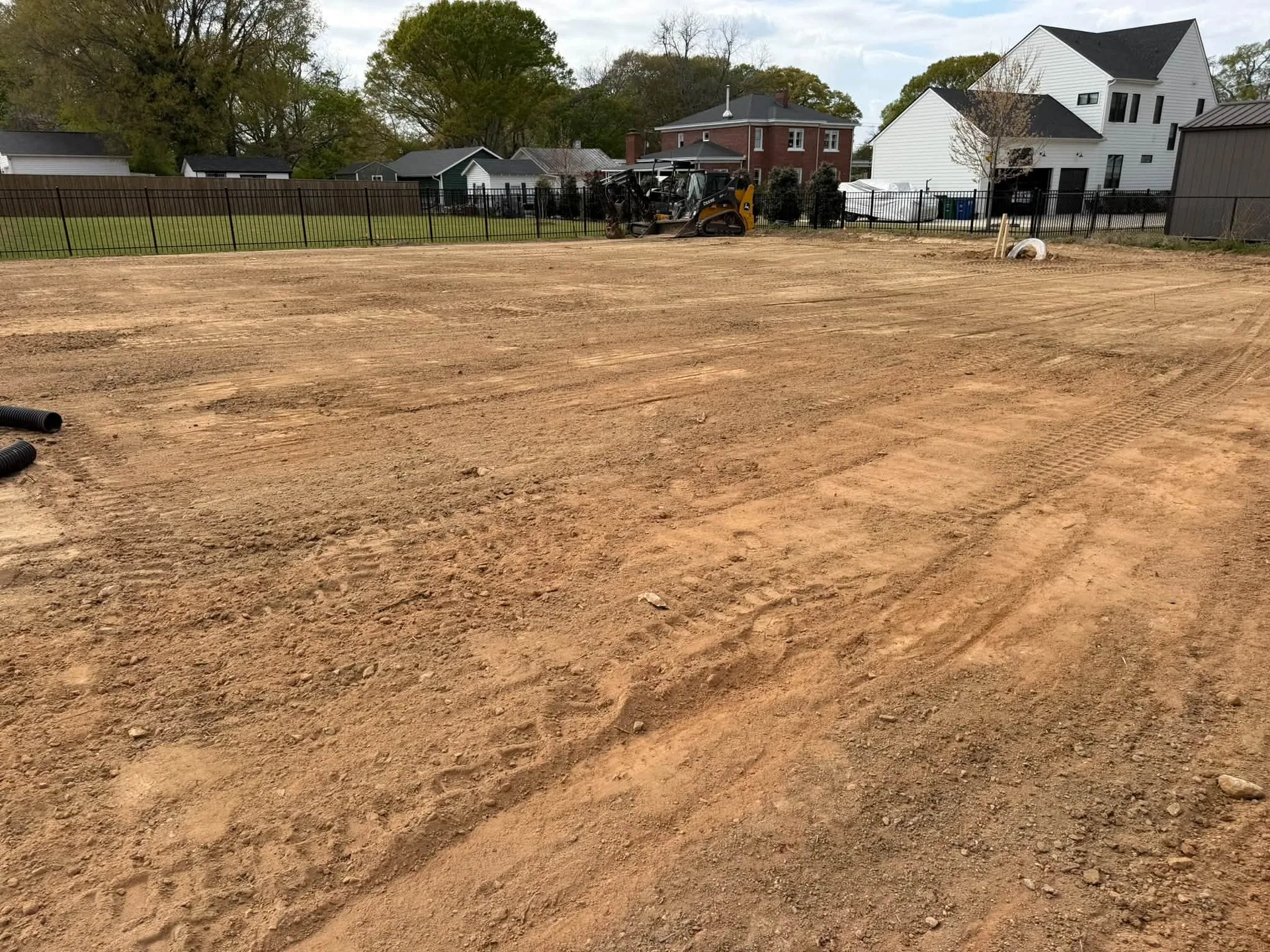
A piped drainage system collects water at its source, such as a gutter, a low corner of a patio or a paved drive, and moves it underground to a safe outlet. Drainage system installation in Greenville, SC gives roof and surface water a closed path so it never spreads across the lawn or soaks the ground beside the house.
These systems are made of solid pipe, catch basins, fittings and outlets rather than gravel trenches. They are the right answer when you know exactly where the water comes from and need to move it somewhere else, fast. On many homes, drainage system installation in Greenville, SC starts at the roof.
C&C Outdoor Solutions installs piped systems for homeowners and businesses throughout Greenville, Simpsonville, Spartanburg and Anderson. Call (864) 399-6658, Monday to Friday, 8:00 AM to 5:00 PM, to schedule a free estimate.
When a Yard Needs a Piped Drainage System
Piped drainage solves problems that start with a specific source of water. You likely need one if you notice:
- Downspouts splashing water against the foundation
- Puddles at the bottom of a driveway or patio after every rain
- Gutters overflowing because their outlets back up
- Mulch beds washing out below a roof valley
- Pop-up emitters or old pipe that no longer drain
If the problem is ground that stays saturated rather than water arriving from a roof or pavement, a gravel trench may fit better. Our French drain installation service handles soggy lawns where water soaks up from below. Many yards have both kinds of water, and the estimate visit sorts out which fix goes where.
How We Work
Our Drainage System Installation Process
Piped drainage depends on steady fall from the first inlet to the final outlet. Every system starts with measurements, because a few inches of elevation decide where the pipe can run and where the water can leave.
-
Step 1
Locate Every Source
We note each downspout, low spot and paved area sending water toward the problem.
-
Step 2
Lay Out the Route
We plan pipe paths, inlet locations and an outlet, then share the free estimate and an estimated schedule.
-
Step 3
Trench and Connect
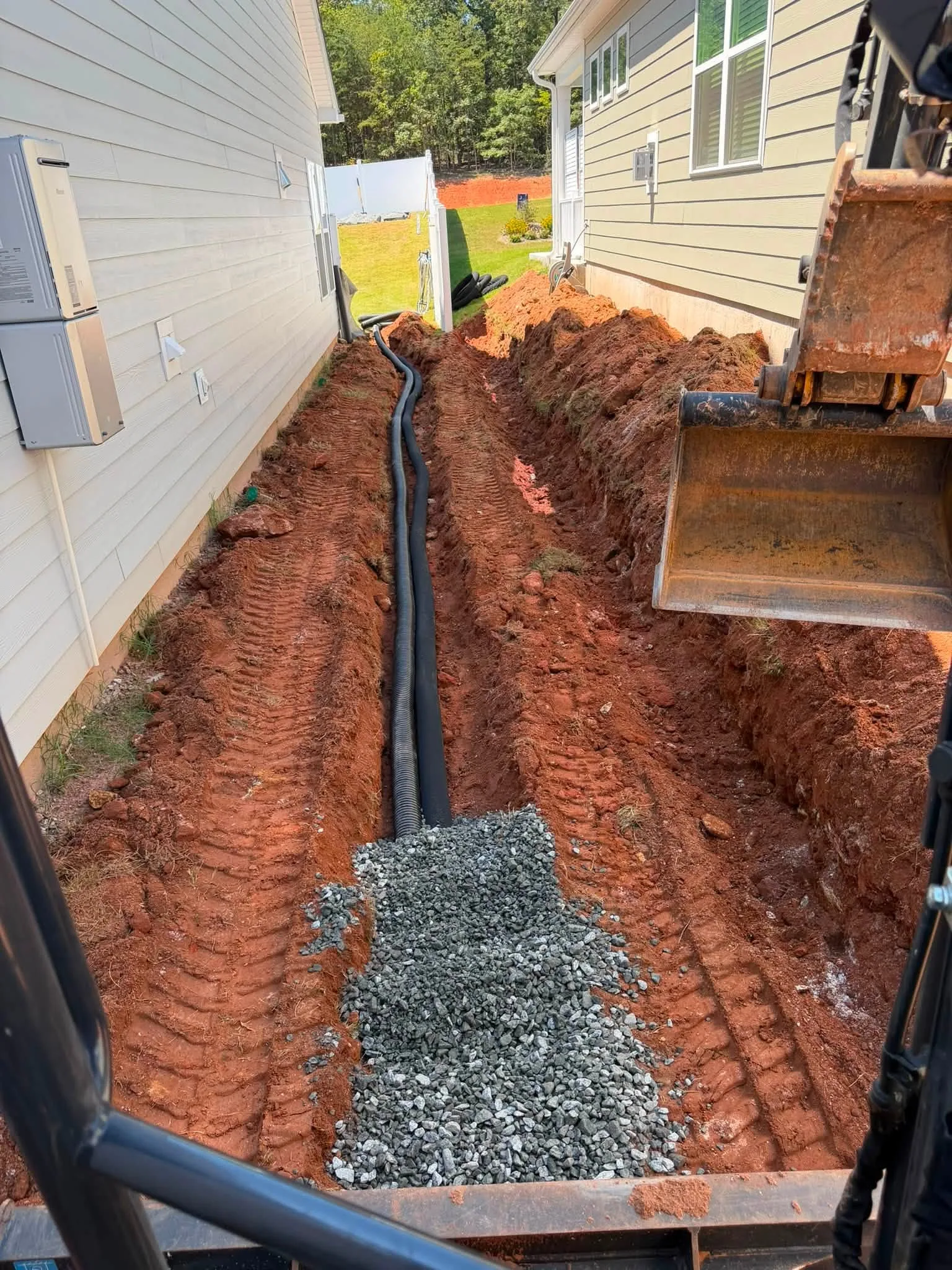
Our team digs to grade, sets catch basins, lays solid pipe and connects each downspout and inlet.
-
Step 4
Restore the Yard
After confirming flow, we backfill, compact and finish the surface with sod, seed, mulch or stone.
Drain Pipe Installation
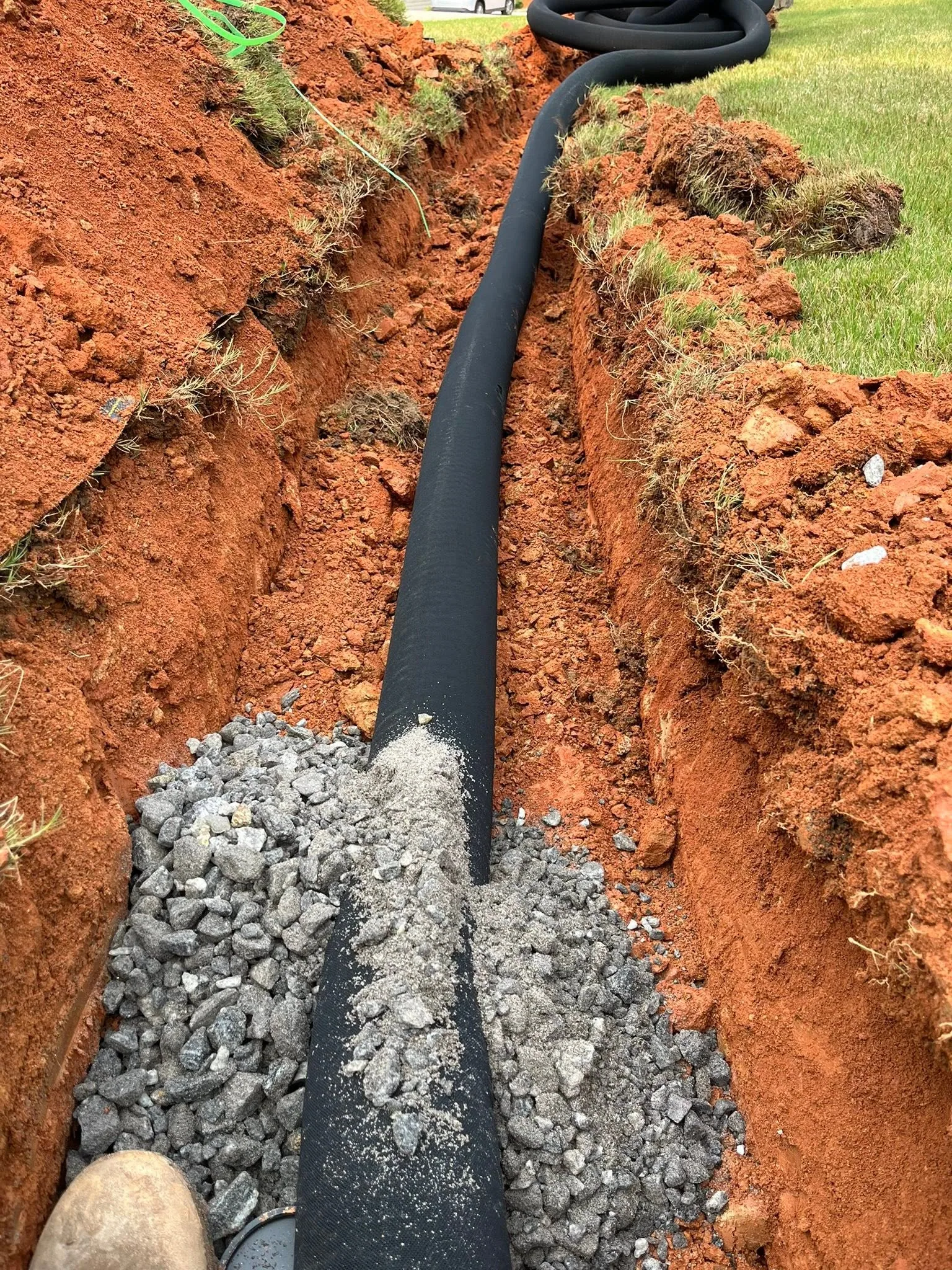
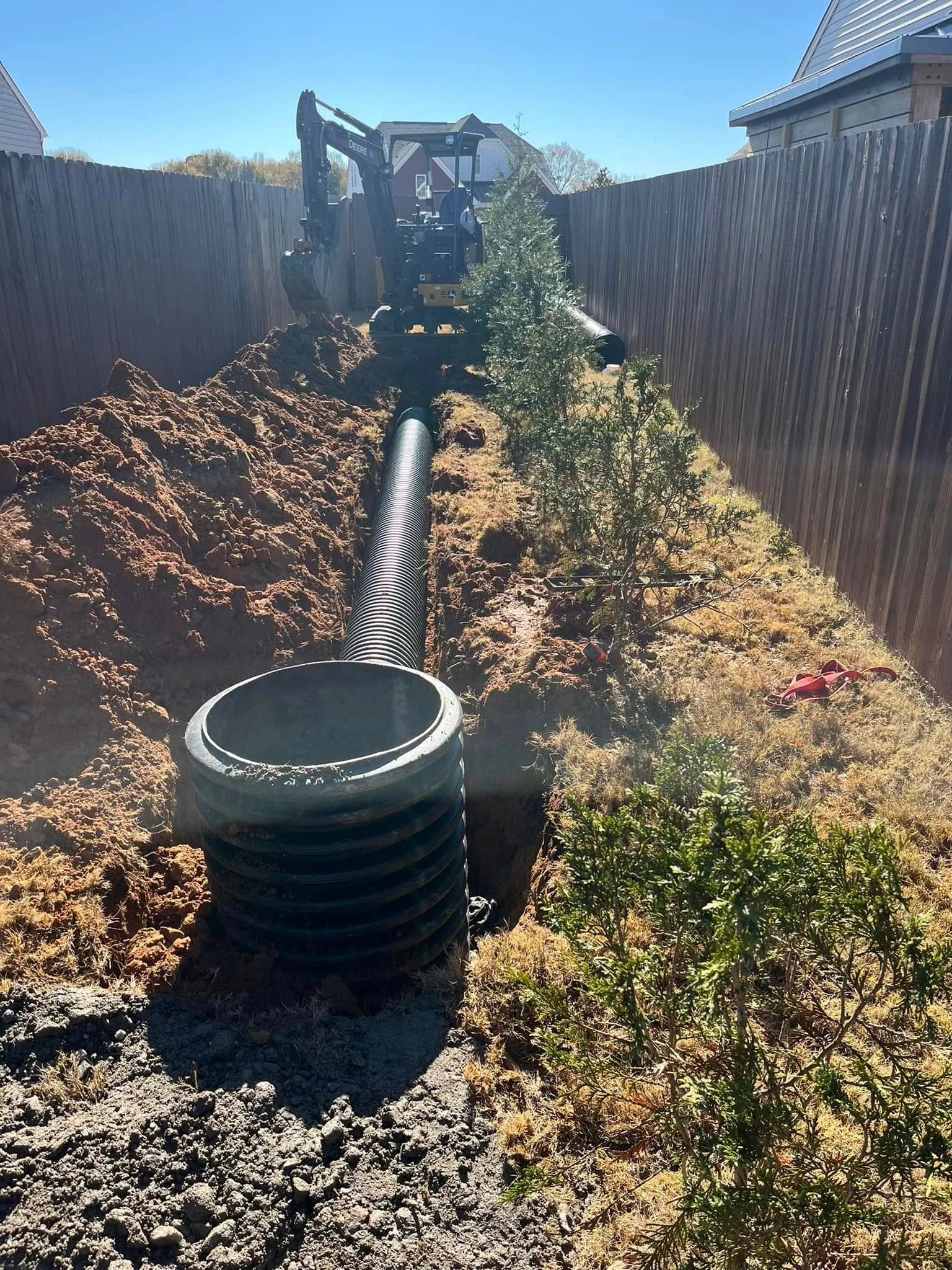
The pipe is the backbone of every system. Drain pipe installation starts with choosing solid pipe sized for the water it will carry, then setting it in a trench with a consistent slope so water keeps moving and sediment does not settle inside. Too little fall leaves standing water in the line; uneven fall creates low spots that collect debris.
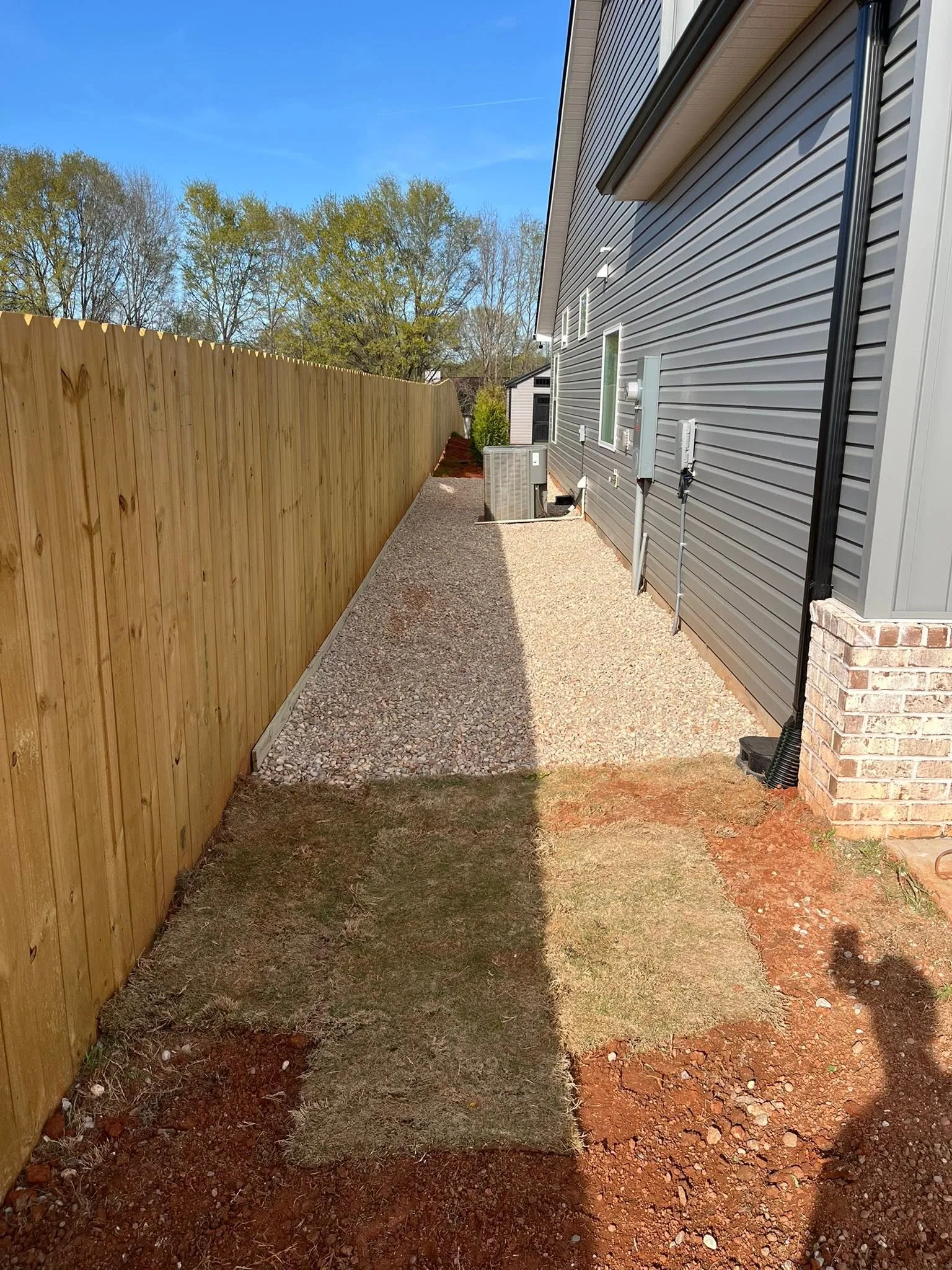
Underground drainage pipe also has to reach an outlet that can take the flow. On many Upstate lots, that means a lower part of the yard, a roadside ditch or a stone-lined discharge point that spreads water out without eroding the soil. On tighter lots, routing around patios, walkways, trees and utilities takes careful planning before the first shovel goes in.
We use long sweeping bends instead of sharp turns where possible, add cleanouts at key points so the line can be flushed later, and backfill in layers to keep the trench from sinking. The result is a line that stays out of sight and keeps working for years.
Catch Basin Installation
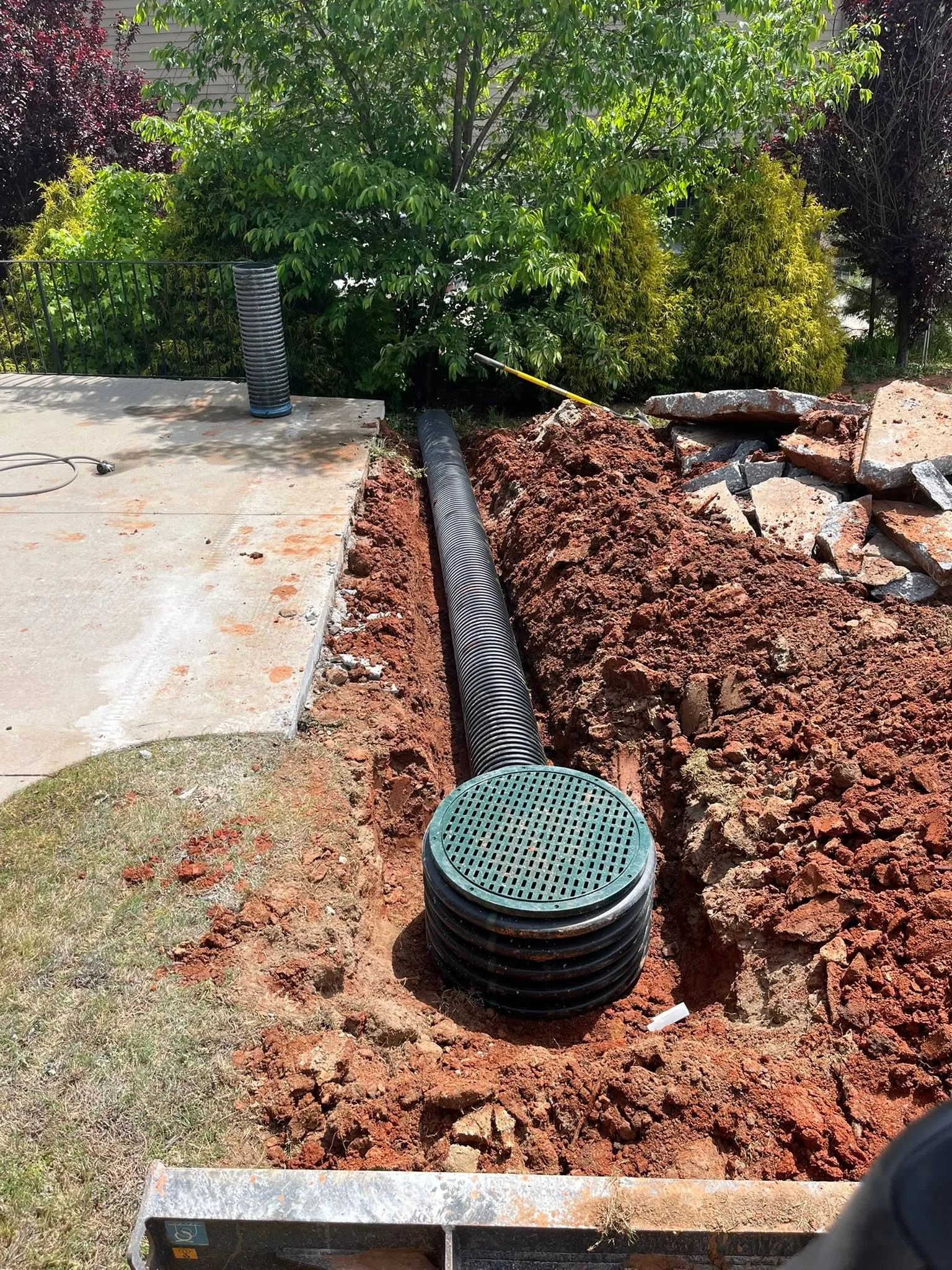
A catch basin is a box set into the ground with a grate on top. Water flows in through the grate, debris settles in the bottom, and pipe carries the cleaner water away. Catch basins go where water naturally pools: the base of a driveway, a low corner of a lawn, the edge of a patio or a dip in a parking area.
Good catch basin installation depends on height. The grate has to sit slightly below the surrounding surface so water flows in rather than around it, and the box needs a firm base so it does not tilt or settle. On a driveway or parking area, the basin and grate must handle vehicle weight.
Several basins can tie into one pipe network, which makes them a strong choice for properties with more than one low spot. A sump at the bottom of each basin traps leaves and grit, and an occasional cleanout keeps the grate and pipe flowing freely, especially after fall leaf drop.
Downspout Drainage
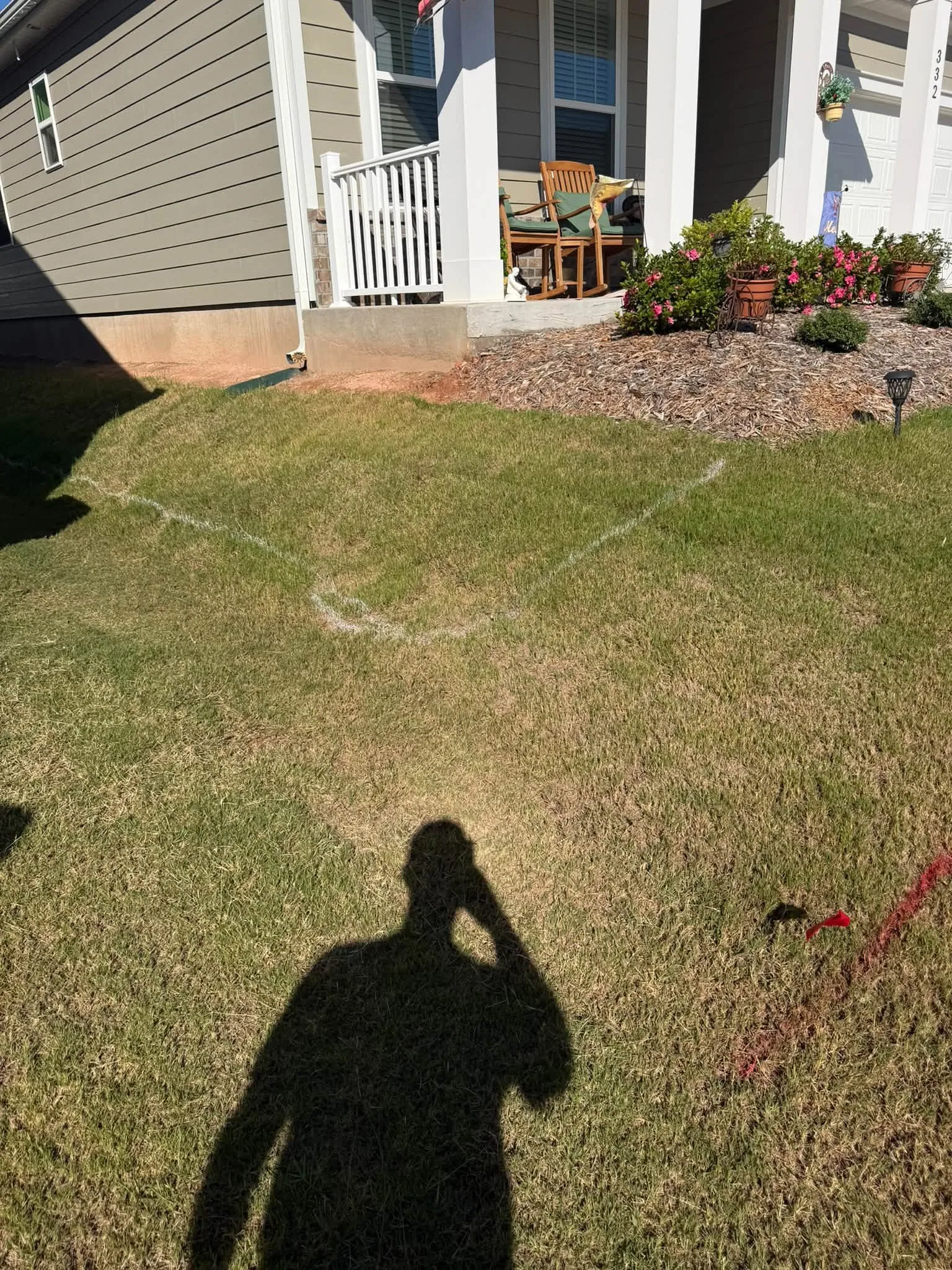
Roofs collect a surprising amount of water. Each downspout drains a share of that roof, and when it empties onto the ground beside the house, the water soaks the soil right next to the foundation, splashes the siding and washes out the beds below it.
Downspout drainage connects each downspout to buried solid pipe that carries roof water well away from the house. The pipe can discharge at a pop-up emitter in the lawn, a stone outlet at the edge of the yard or a larger drainage line that already serves the property. Connections at the downspout are made with fittings that can be opened for cleaning, since gutters send leaves and roof grit into the system.
Downspout lines are often the simplest drainage upgrade a homeowner can make, and they make a natural first phase of drainage system installation in Greenville, SC homes. Once roof water is under control, many soggy areas near the house dry out on their own.
What Determines the Price of a Drainage System
The price of drainage system installation in Greenville, SC depends on scope, materials and the size of the property. Estimates are built on site. The main factors are:
- Total length of pipe and the number of downspouts connected
- How many catch basins the plan requires
- Depth and distance to a suitable outlet
- Surfaces to cut through or protect, such as patios and walkways
- Restoration needed afterward, from seed to new sod
We explain each line of the estimate, and the visit is always free. Some homeowners start with downspout lines and add catch basins later. A plan laid out for the whole property makes that kind of phased work simple and keeps every new piece tied in.
Why Choose Us for Piped Drainage
C&C Outdoor Solutions is a family-owned company with over 25 years of experience in stormwater management, landscaping and hardscape construction. Drainage system installation in Greenville, SC touches all three: the water plan, the ground the pipe runs through and the patios or beds it has to pass.
We use sustainable materials and methods chosen to last, and we restore your yard so the system disappears once it is installed. A few downspout lines can often be finished in a few days, while a larger network with several catch basins may take longer. Either way, you get an estimated schedule up front and a clear picture of the route before work begins. Cleanout locations are pointed out at the end, too.
Underground Drainage Pipe Work Across the Upstate
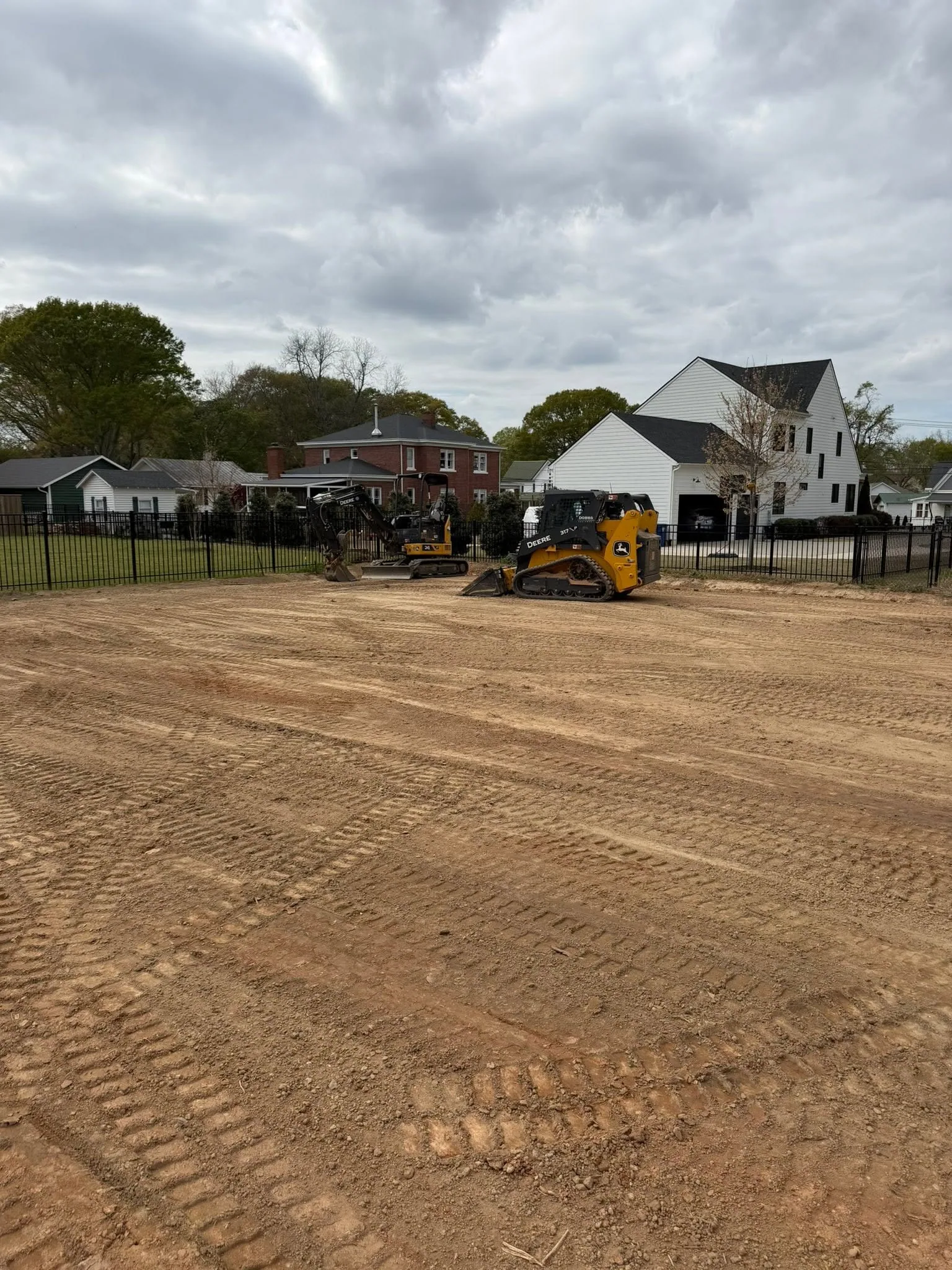
Roof and driveway runoff is a problem in every Upstate town, whether the house sits on a compact city lot or a few acres of rolling ground. We install underground drainage across Greenville, SC, our base in Simpsonville, Spartanburg and Anderson, reaching about 50 miles from home. Compact lots often need careful routing around patios and fences, while bigger tracts give the pipe more room but longer runs to an outlet.
Larger properties and commercial sites often need piped drainage as part of a broader runoff plan. For those, our stormwater management work ties pipe, grading and outlets together, and the full range of drainage and erosion control services covers everything from culverts to graded slopes.
Drainage System Questions
Drainage System FAQs
What is the difference between a drainage system and a French drain?
A piped drainage system uses solid pipe and catch basins to carry water from a known source, such as downspouts or a driveway, to an outlet. A French drain uses a gravel trench and perforated pipe to collect water soaking through the ground. Many properties benefit from both, with each handling the type of water it is built for.
Can existing downspouts be connected to underground pipe?
Yes. Most downspouts can be fitted with an adapter that drops roof water straight into buried solid pipe. We route the line away from the foundation to an emitter, a stone outlet or a larger drain line. Adding a cleanout near each downspout makes it easy to clear leaves and grit that wash off the roof over time.
How often should a catch basin be cleaned?
Check the grate after major storms and in late fall, once leaves have dropped, and clear anything sitting on top. The sump at the bottom of the basin should be emptied whenever debris builds up toward the outlet pipe, often once or twice a year on a typical home lot. Basins under trees may need attention more often.
Can a drainage system be installed under a driveway or patio?
Often it can. Pipe can be bored or trenched beneath some surfaces, or routed around them, depending on the material and layout. On new projects, the best time to run drainage is before the paving goes down. We look at the existing surfaces during the estimate and recommend the route that protects them while still giving water a clean path out.
Do pop-up emitters work well in Upstate yards?
They can, when the yard slopes away from the house and the emitter sits at a low point with room for water to spread. In heavy clay, water may linger around an emitter longer than in sandy soil, so placement matters. For lots without enough fall, piping to a ditch, a stone outlet or a larger drain line is usually more reliable.
Water Off the Roof, Out of the Yard
Route Roof and Surface Water Where It Belongs
Every downspout and low spot that drains toward the house adds wear to your foundation, beds and lawn. Call C&C Outdoor Solutions, Monday to Friday, 8:00 AM to 5:00 PM, and we will map the water on your property and give you a free estimate for a system that moves it away.