Retaining Walls
Retaining Wall Installation in Greenville, SC That Holds the Hill
Block retaining walls that turn steep, washing slopes into level, usable ground, built with the base and drainage that keep a wall standing straight.
Retaining Wall Installation Greenville SC Property Owners Depend On
C&C Outdoor Solutions provides retaining wall installation in Greenville, SC and across the Upstate for homeowners with sloped yards, eroding banks and backyards too steep to use. A well-built wall holds soil in place, creates flat ground for a lawn, garden or patio, and slows the runoff that carries dirt off a hillside after every storm. Call (864) 399-6658 to have us look at your slope.
Retaining walls sit where hardscape and drainage meet, and that is where our experience lies. Our family-owned company has spent more than 25 years on stormwater management, grading and hardscape construction, so we treat the water behind a wall as seriously as the block in front of it.
The difference matters on Upstate lots. Dense red clay subsoil packed behind a wall drains slowly, and a wall that cannot release that water is a wall that will eventually bow, crack or tip.
Signs Your Sloped Yard Needs a Retaining Wall
Slopes rarely fail all at once. Most give warning signs for months or years before a homeowner decides something has to change:
- Soil, mulch or gravel washes onto the patio, driveway or sidewalk after rain
- A bare, rutted bank where grass will not stay rooted
- Part of the yard is too steep to mow safely or use at all
- An old timber or stacked-stone wall is leaning, bulging or rotting
- Tree roots are exposed along the edge of a slope
- Water runs straight down the hill toward the house or foundation
A leaning wall deserves attention sooner rather than later. Once a wall starts to rotate, the soil behind it pushes harder, and a small lean can become a collapse after a run of wet weather.
How It Works
Our Retaining Wall Building Process
Most of the strength in a retaining wall is hidden. The steps underground do more to keep a wall straight than the block that shows.
-
Step 1
Site Visit and Slope Assessment
We measure the height and length of the slope, look at where water enters and leaves the area, and talk through how you want to use the ground. Taller walls, walls near a driveway or structure, and walls in a homeowners association can carry extra design or approval steps, and we raise those early.
-
Step 2
Excavation and Leveling Pad
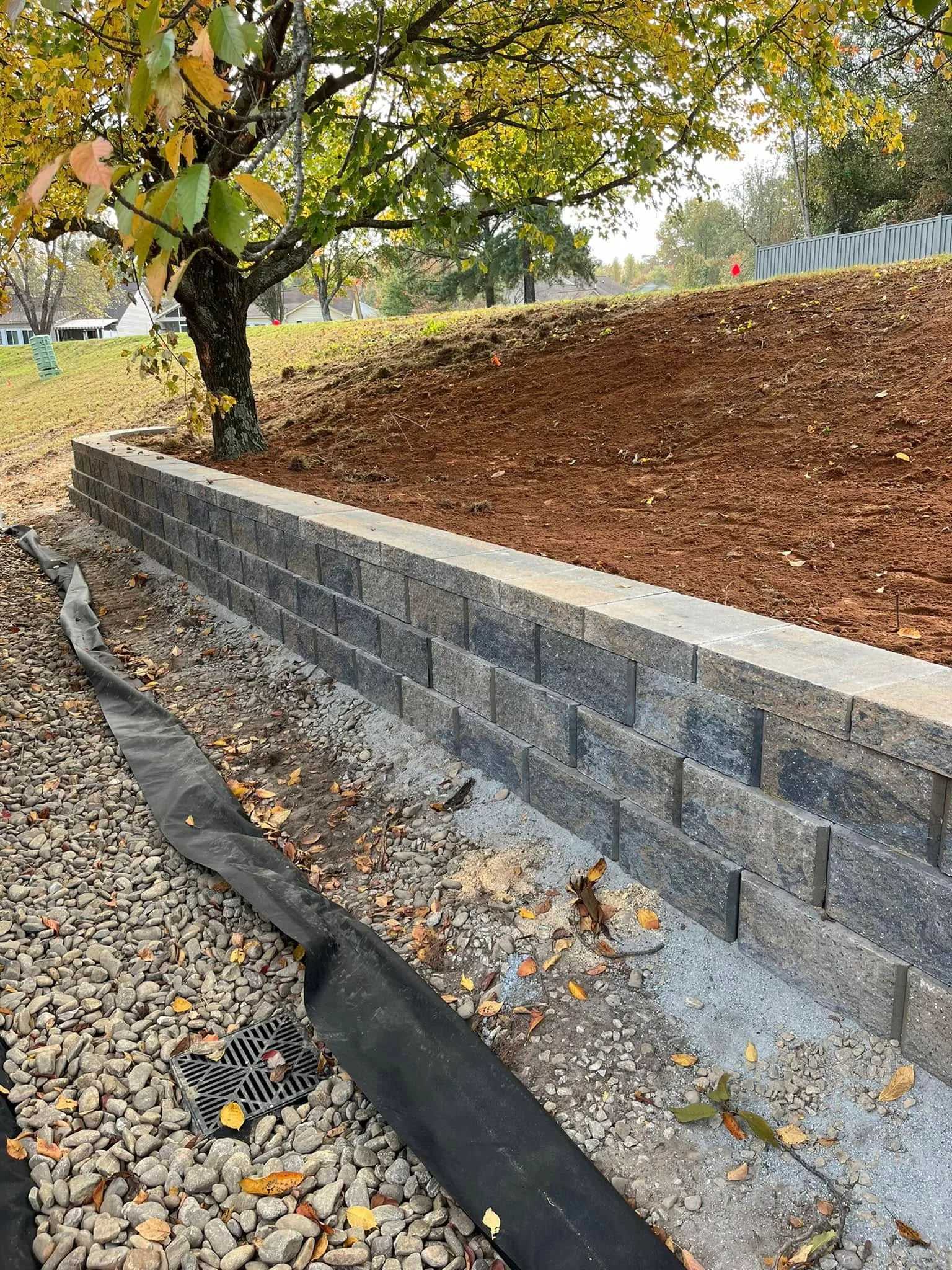
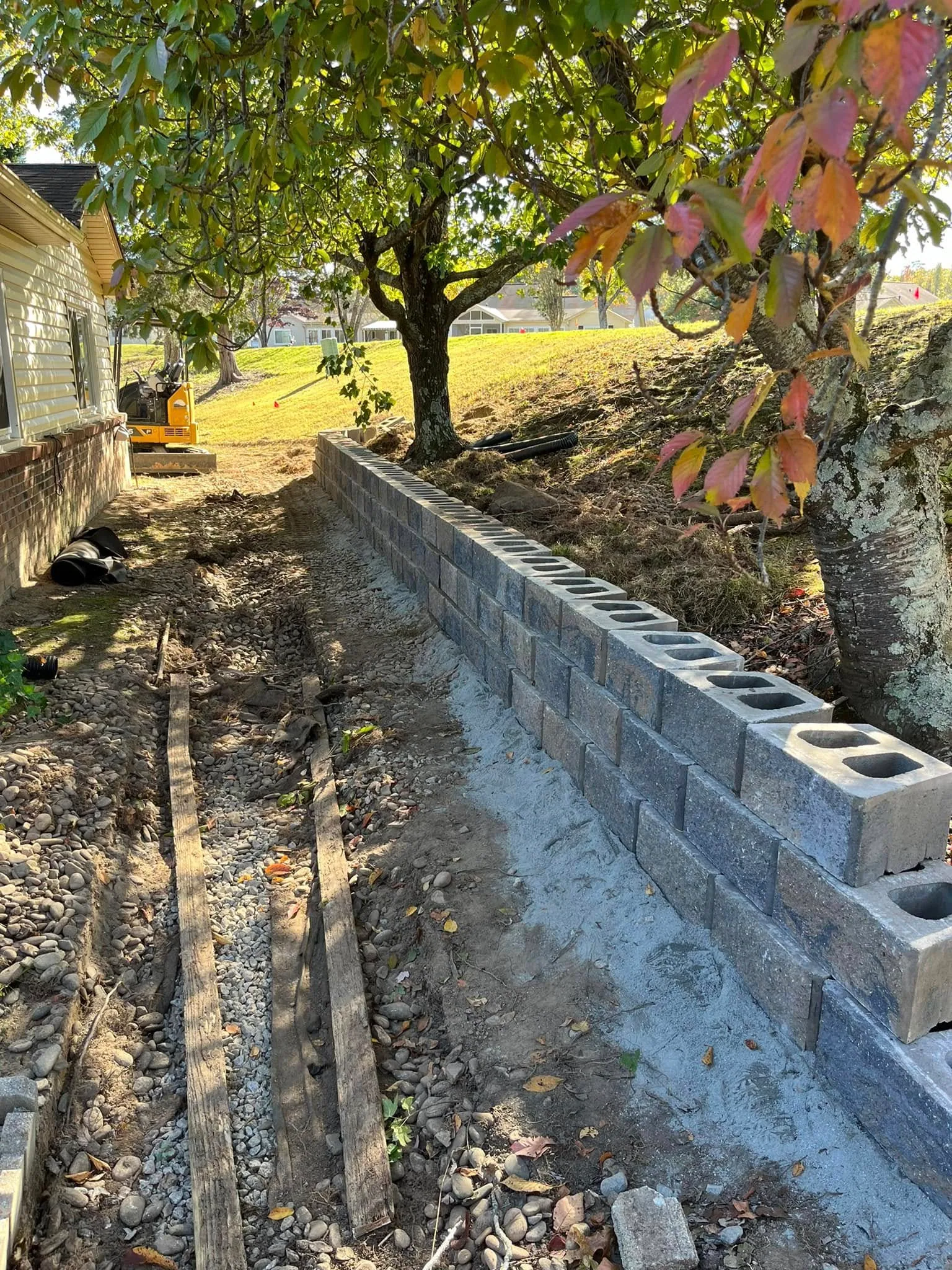
The crew digs a trench along the wall line and builds a compacted gravel leveling pad. The first course of block is set below grade on that pad so the wall cannot slide at the base.
-
Step 3
Drainage and Backfill
A perforated drain pipe runs behind the bottom course, and clean gravel fills the space behind the block as each course goes up. Taller walls also receive layers of grid reinforcement tied back into the slope.
-
Step 4
Caps, Grading and Cleanup
Cap stones finish the top, soil is graded so runoff does not pour over the wall, and disturbed areas are cleaned up and restored before we walk the work with you.
Block Retaining Wall Construction for Strength and Clean Lines
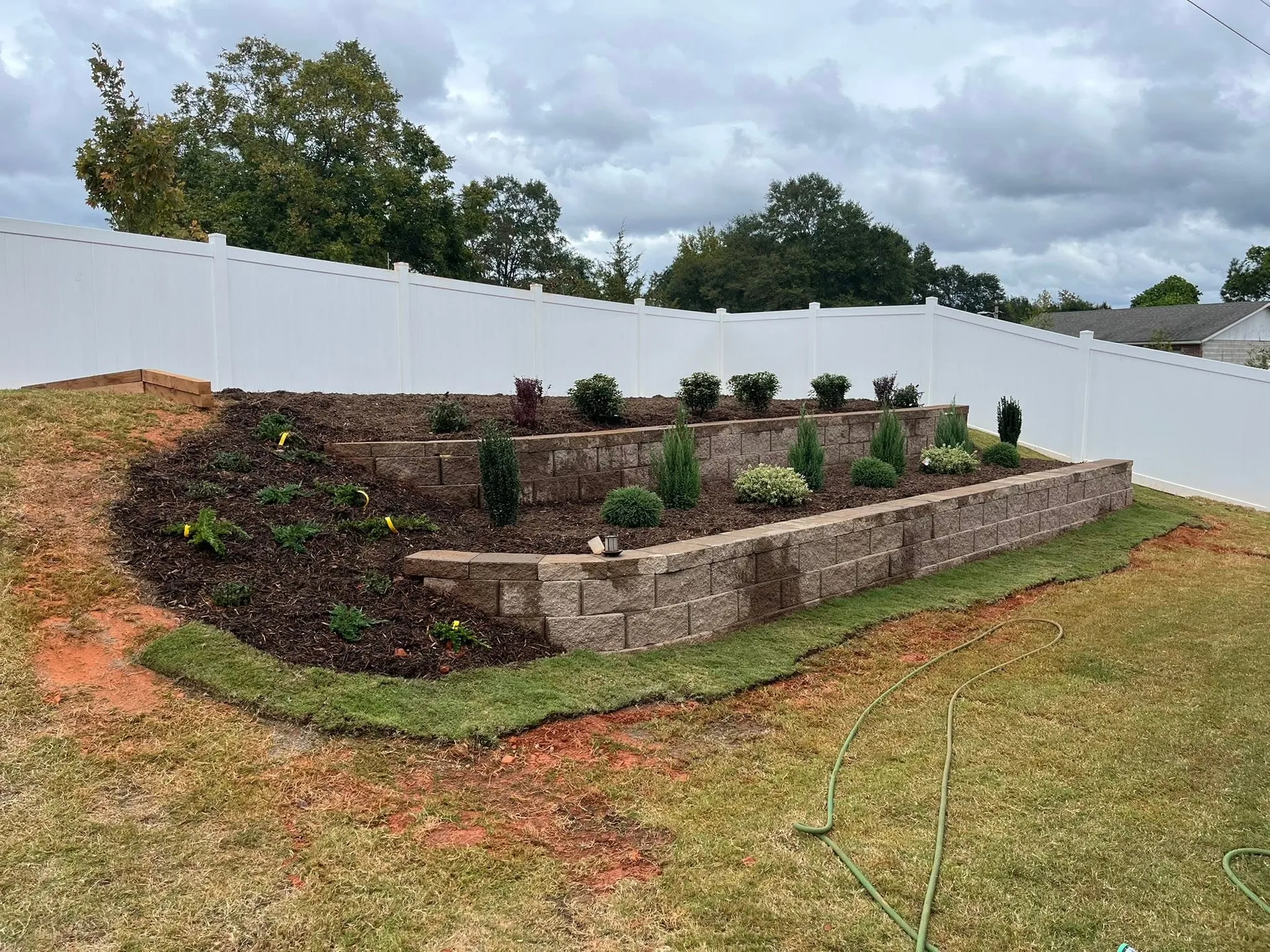
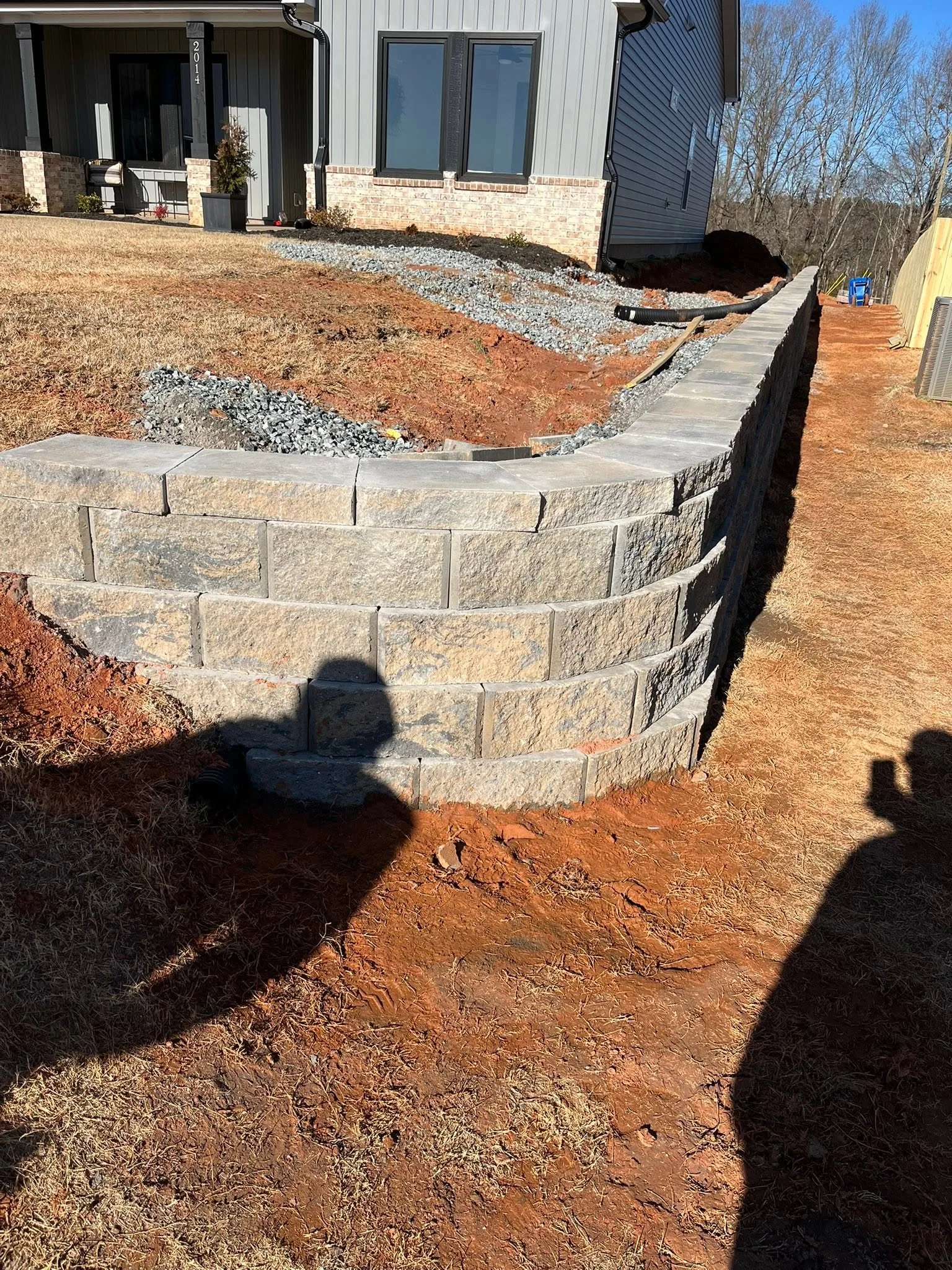
A block retaining wall uses interlocking concrete units that stack without mortar. Each course sets slightly back from the one below, so the wall leans into the hill and gravity works with it. The units come in a wide range of colors and faces, from smooth modern finishes to textured block that resembles natural stone.
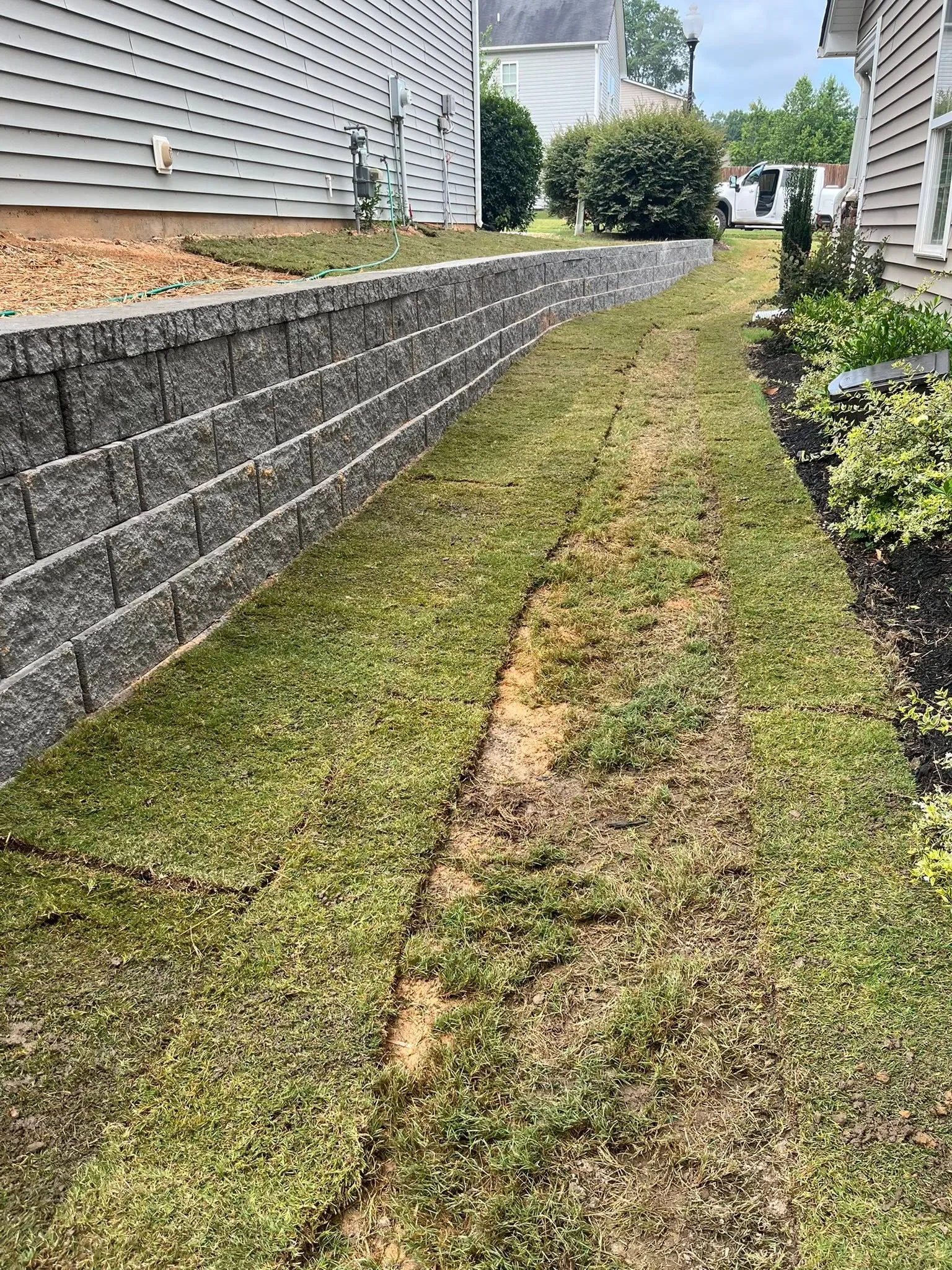
For retaining wall installation in Greenville, SC, segmental block walls are a strong fit for most residential slopes. They tolerate small ground movement without cracking the way a poured wall can, they can follow curves around a bed or patio, and a damaged unit can be replaced without rebuilding the wall. Steps, corners and planters can be built from the same material so the whole project looks consistent.
When a wall supports a patio, the two are planned together. Our patio installation work often begins with a wall that creates the level ground the patio sits on, and matching the block to the pavers ties both pieces into one design.
A Sloped Yard Retaining Wall to Reclaim Usable Space
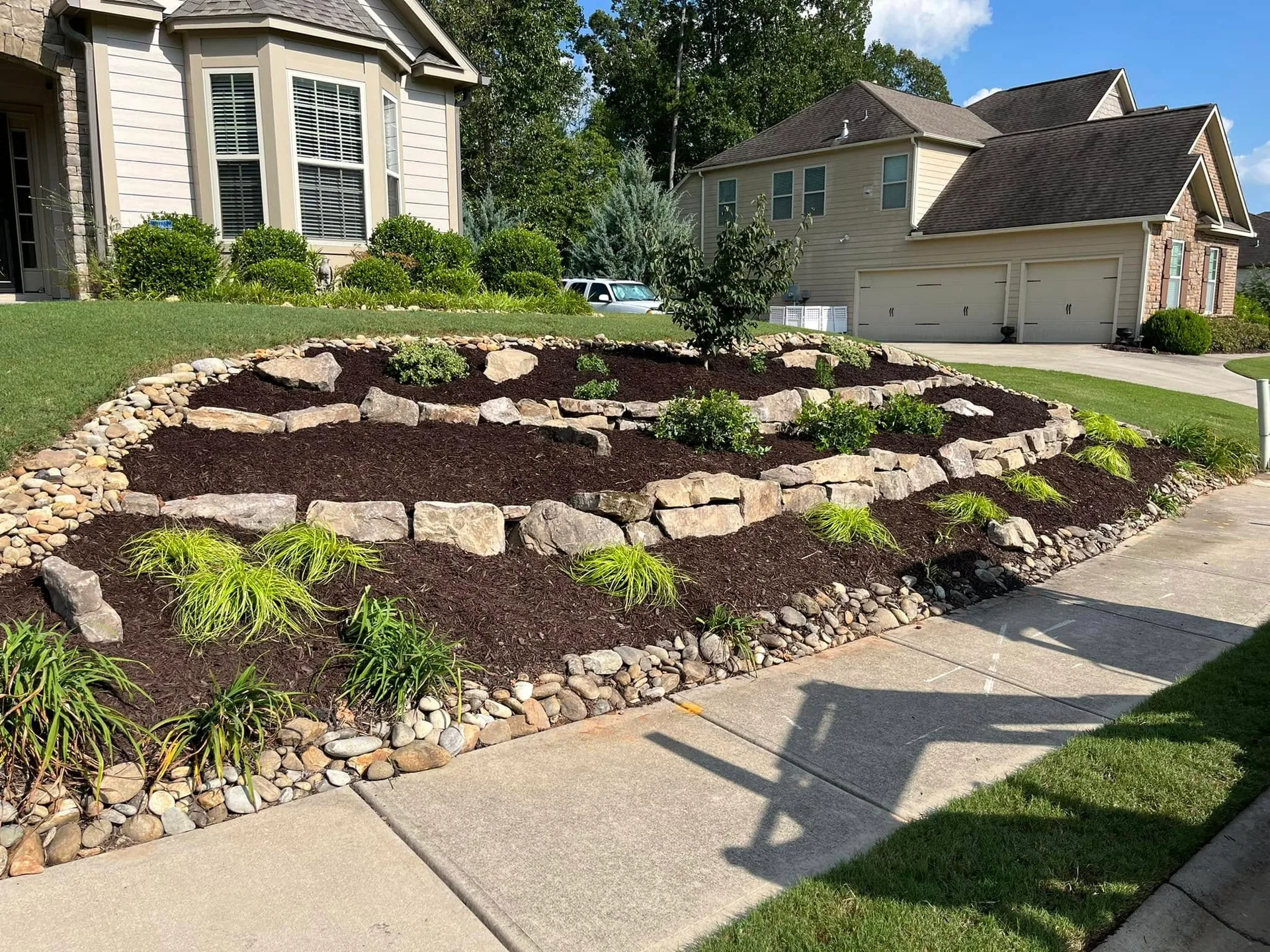
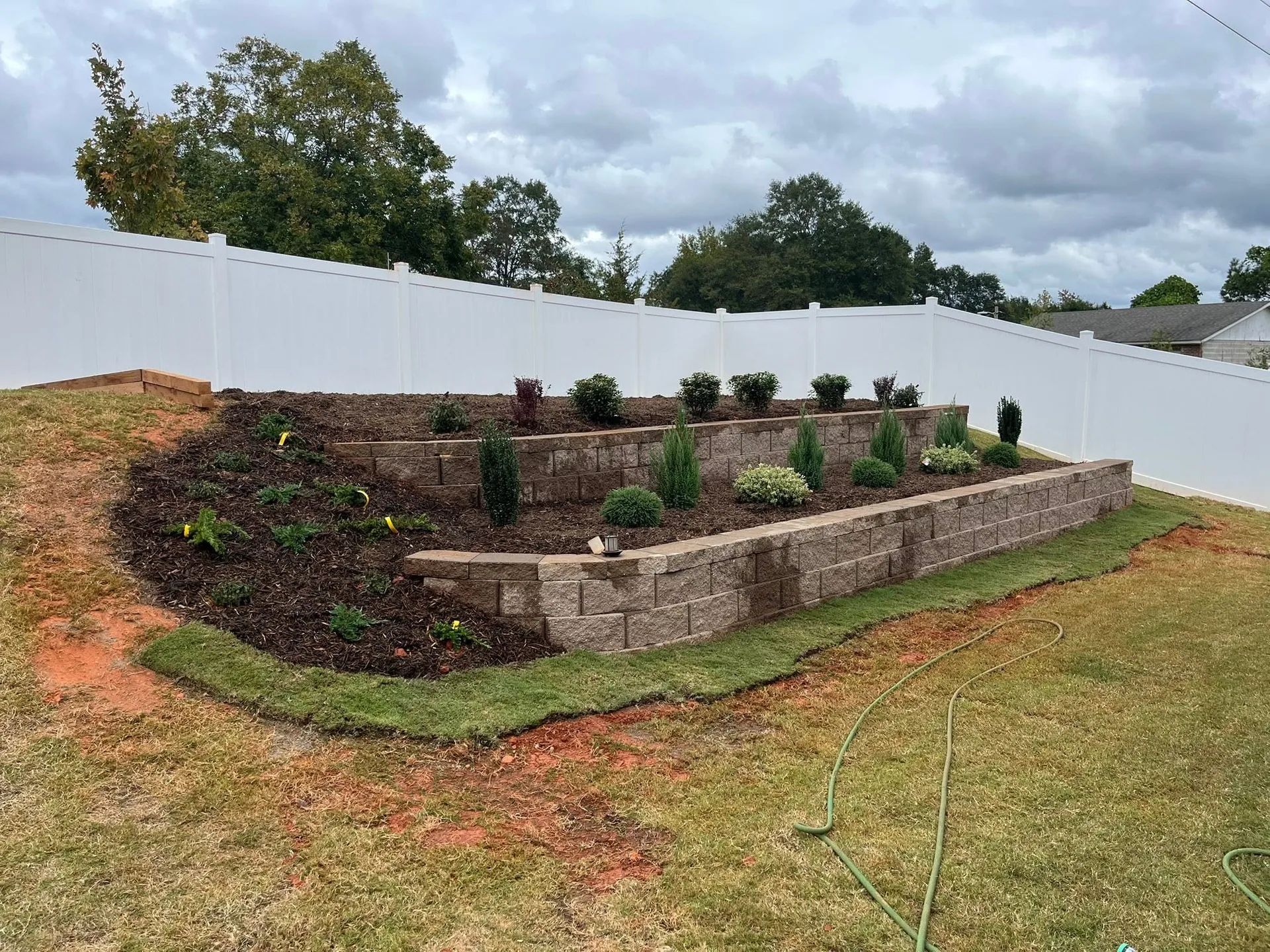
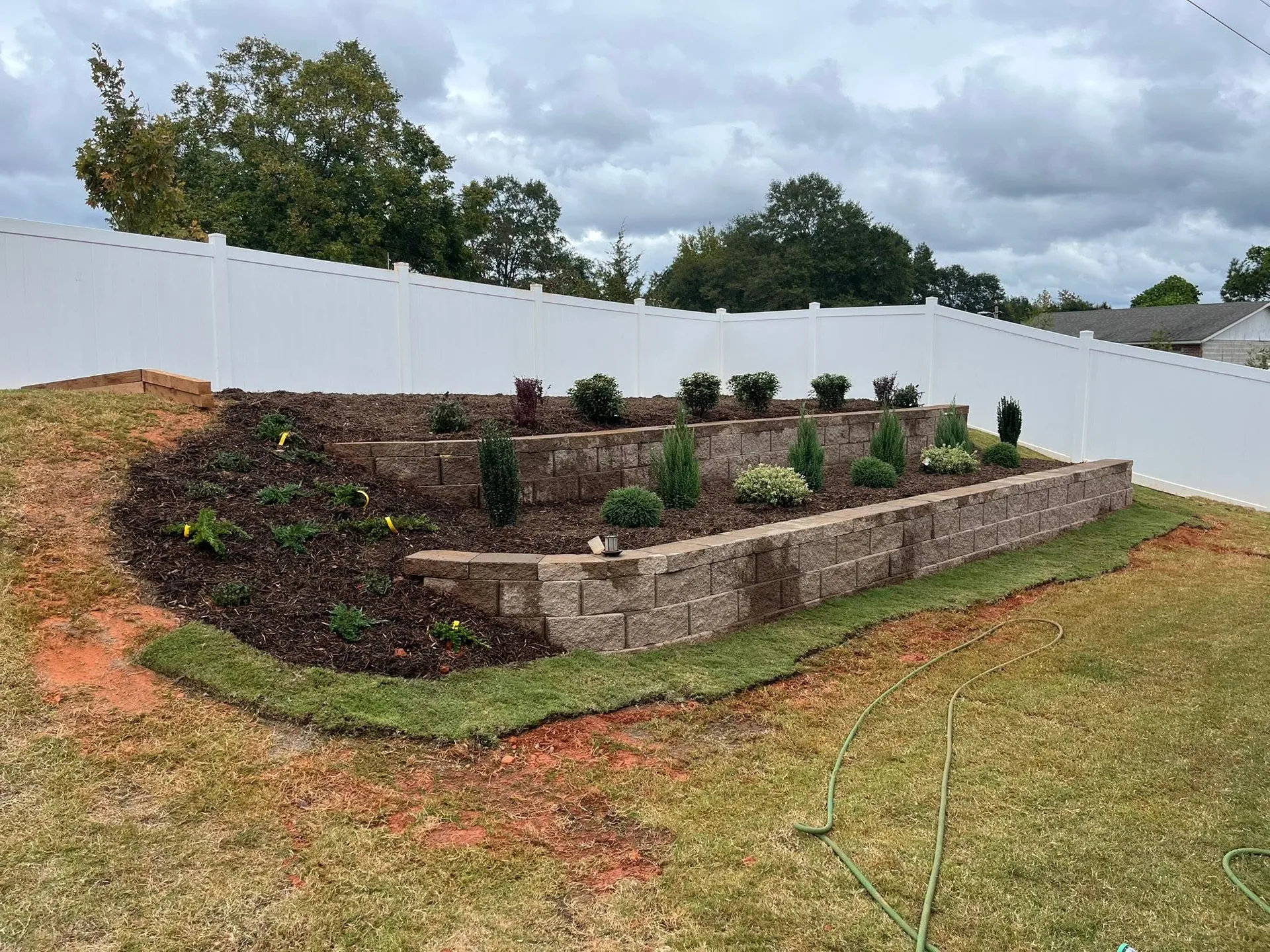
A sloped yard retaining wall does more than hold dirt. Cutting into a hill and holding it back with one wall, or stepping it down with two or three shorter terraced walls, can turn an unusable bank into a flat lawn, a play area, a garden or a place for outdoor seating.
Terracing is often the better choice on a tall slope. Several shorter walls spread the load, are easier to build well and give you planting beds between levels. A single tall wall can make sense where space is tight, but it calls for more reinforcement and closer attention to design.
We also look at what sits above and below the slope. A driveway, a fence line, a large tree or a neighbor's yard at the top changes the forces on the wall, and a house or patio at the bottom changes where the water must go once it reaches level ground.
Drainage Behind Retaining Walls: Why Walls Fail Without It
Water is one of the main reasons retaining walls fail. After a heavy Upstate thunderstorm, the soil behind a wall can fill with water, and saturated soil is heavier than dry soil. Without a way out, that pressure pushes against the back of the wall until it bulges or tips forward.
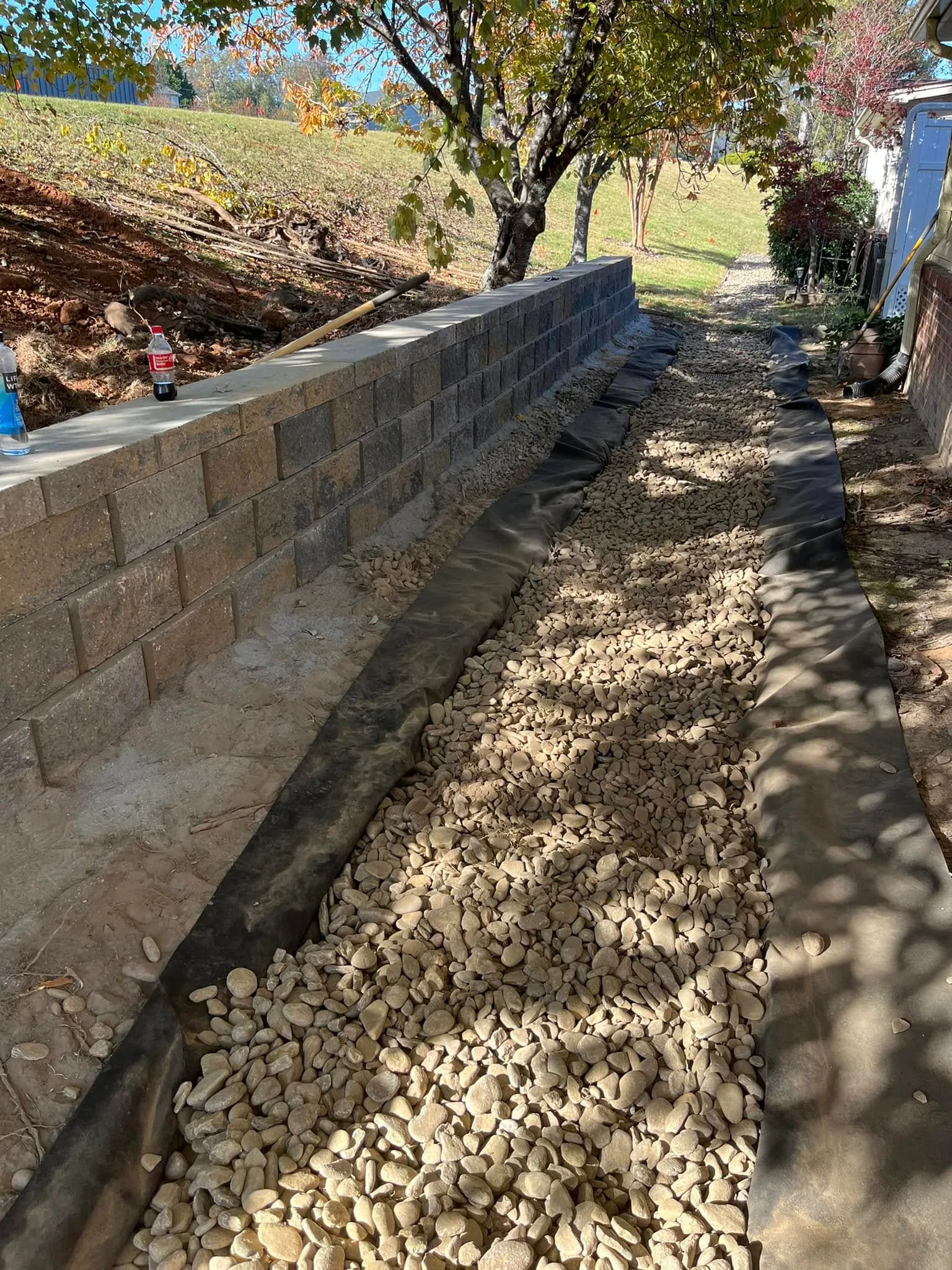
Every wall we build includes a gravel drainage zone directly behind the block and a perforated pipe at the base that carries water out to daylight or to a drain line. Filter fabric keeps fine clay from clogging the gravel over time. Where water already runs hard down the hill, we may also add surface drainage at the top of the wall to catch it before it soaks in.
Some yards need more drainage than a wall alone can provide. In those cases a French drain installation above or beside the wall can intercept groundwater before it ever reaches the backfill.
What Affects the Cost of a Retaining Wall
Retaining wall installation in Greenville, SC is priced after a site visit because height, soil and access change the work more than length alone. The main factors include:
- Wall height and length, measured in face area
- Block style and color, plus caps, steps or corners
- Amount of excavation and soil that must be moved or hauled off
- Drainage pipe, gravel backfill and grid reinforcement the wall requires
- Equipment access to the slope through gates and side yards
- Any design or approval steps a taller wall needs
We explain how each factor shapes your estimate, and the visit and estimate are free. Retaining wall installation in Greenville, SC and the surrounding towns always starts with that first look at the ground.
Why Choose Us as Your Retaining Wall Contractor
A retaining wall contractor with a drainage background builds differently. We look at the whole slope, where the water comes from and where it needs to go, rather than only the line where the block will sit. That habit comes from more than 25 years of stormwater, erosion and grading work in upstate South Carolina.
C&C Outdoor Solutions is family-owned and focused on lasting relationships with the people we serve. You get a clear estimate, an estimated schedule before work starts, and a wall built with the base, backfill and drainage it needs to last. Retaining walls are one part of our hardscaping and landscaping services, so planting, sod and lighting around the finished wall can be handled in the same project.
Retaining Walls Greenville SC and Upstate Neighbors Rely On
We provide retaining wall installation in Greenville, SC and throughout the Upstate within about 50 miles of our Simpsonville base. Customers in Greenville, landscaping in Simpsonville, Spartanburg landscaping and landscaping in Anderson call us for everything from a short garden wall to a set of terraced walls holding a steep backyard.
Rolling Piedmont terrain means slopes are common across the region, from newer subdivisions graded onto hillsides to older lots on wooded ridges. The red clay under most of these yards behaves the same way in every town, which is why every wall gets the same attention to drainage and base, wherever it is built. The first visit to measure your slope and talk through options is free, and you will know the plan before any digging begins.
Retaining Wall Questions
Retaining Wall Installation FAQs
How tall can a block retaining wall be?
Height depends on the block system, the soil, the slope above the wall and anything sitting on top of it, such as a driveway. Shorter garden walls are straightforward, while taller walls need grid reinforcement and may require an engineered design or local approval. On a steep slope, two or three terraced walls are often stronger and easier to build than one tall wall.
Why is my old retaining wall leaning?
Most leaning walls are failing because water has built up behind them, the base was too shallow or the wall had no gravel backfill. Timber walls also lean as the wood rots. Once a wall starts to tilt, the soil pressure behind it grows, so the lean usually gets worse. We can look at the wall and explain whether it can be repaired or should be rebuilt.
Do retaining walls need drainage behind them?
Yes. Rain soaks into the soil behind a wall and adds a great deal of weight and pressure. Without a gravel drainage zone and a perforated pipe at the base to carry that water away, the pressure keeps building until the wall bulges, cracks or tips. Proper drainage is the single most important part of a wall that lasts.
How long does retaining wall installation take?
A short garden wall can often be finished in a few days. Longer walls, tall walls with reinforcement and terraced projects with multiple levels can take several weeks, depending on the amount of excavation and the weather. Before work begins, you receive an estimated schedule so you know when the crew will arrive and roughly when the wall will be complete.
Can a retaining wall stop erosion on my slope?
A retaining wall is one of the most effective ways to stop a slope from washing away. It holds the soil in place and creates flatter ground where rain can soak in slowly instead of racing downhill. On some slopes we pair a wall with grading, plantings or other erosion control measures so the ground above and below it stays stable.
Free Wall Estimates
Turn Your Steep Slope Into Level Ground
A failing bank or a backyard you cannot use is a problem that grows with every storm. Let us measure the slope, check the drainage and show you what a properly built wall can do for your property. Call (864) 399-6658, Monday to Friday, 8:00 AM to 5:00 PM.