Erosion Control
Erosion Control in Greenville, SC for Slopes, Ditches and Job Sites
Silt fence, riprap and hydroseeding that hold Upstate soil in place on bare slopes, washing ditches and graded ground, from a family-owned team based in Simpsonville.
Erosion Control Greenville SC Slopes and Job Sites Depend On
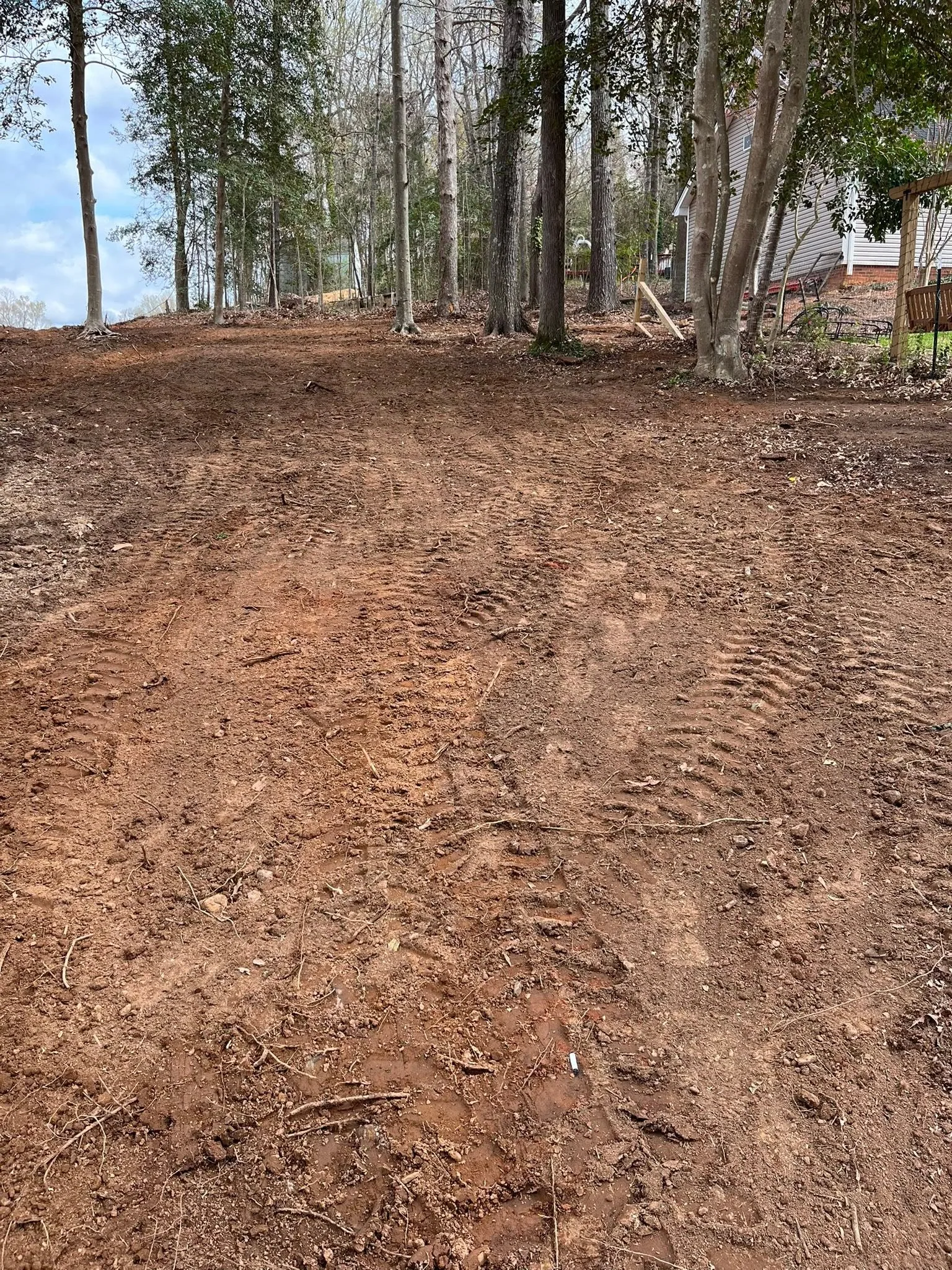
Erosion control in Greenville, SC keeps rain from carrying soil off the places that can least afford to lose it: steep banks, new grading, drainage outlets and ditch lines. C&C Outdoor Solutions installs the barriers, stone armor and seeded cover that hold the ground together until vegetation takes over.
The need is common across the Piedmont. Soil scientists note that many areas of Cecil soil, the red clay series found throughout the region, have already lost their topsoil to erosion, leaving the red subsoil exposed. Once that happens, each storm cuts a little deeper.
Homeowners call about washing slopes and bare patches, while builders and businesses call about graded ground that needs protection during and after construction. Call (864) 399-6658 for a free estimate anywhere within about 50 miles of Simpsonville.
Signs Soil Is Washing Off Your Property
Erosion is easy to miss until it has already moved a lot of ground. Walk the property after a heavy rain and look for:
- Small rills or gullies running down a slope
- Red mud fanned across driveways, patios or the street
- Exposed roots on trees and shrubs along a bank
- Pipe outlets with a hole scoured out below them
- Ditch sides that slump or cave in after storms
Prompt erosion control in Greenville, SC keeps the repair small and the cost down. A gully that is a few inches deep this spring can undercut a walkway, a fence line or a retaining wall within a few seasons if water keeps following the same path.
How We Work
Our Erosion Control Process
Stopping erosion means fixing the water that causes it and protecting the soil while it heals. We plan both parts together.
-
Step 1
Find the Source
We look at where runoff enters the eroding area, how fast it moves and what kind of ground it crosses.
-
Step 2
Match the Method
Gentle bare ground may only need seed and cover, while steep or concentrated flow calls for silt fence or riprap.
-
Step 3
Install the Protection
Our team trenches in fence, places fabric and stone, or sprays hydroseed, shaping the ground first where it needs it.
-
Step 4
Hand Off the Care Plan
We explain watering for new seed and what to watch after storms so the protection keeps working. New cover is most fragile in its first few weeks.
Silt Fence Installation
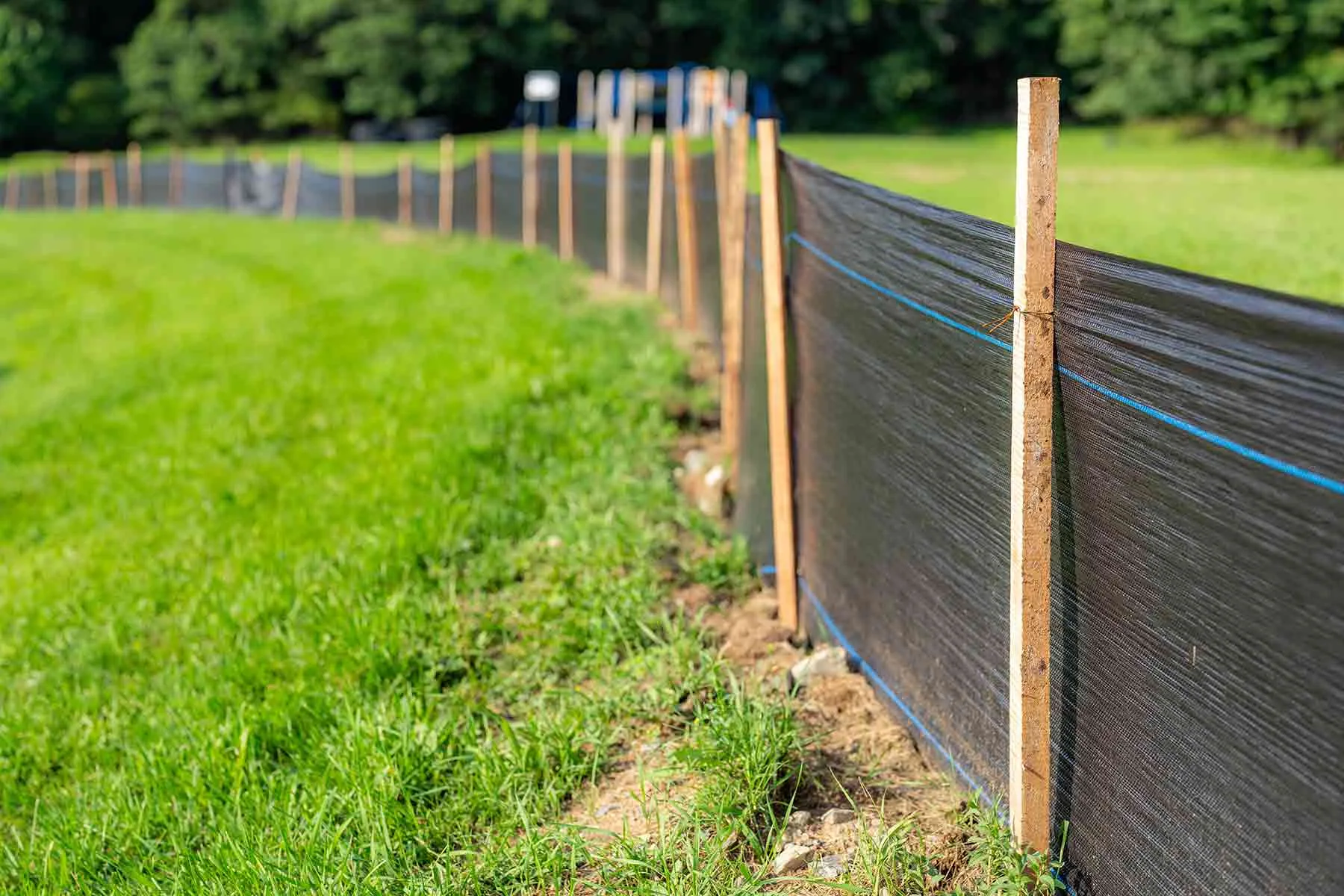
Silt fence is a temporary barrier of woven fabric attached to stakes, set along the downhill edge of disturbed ground. Its job is to let water pass through slowly while trapping the sediment it carries, so the soil stays on the site instead of washing into a yard, street or stream.
Proper silt fence installation makes the difference between a barrier that works and one that fails in the first storm. The bottom edge of the fabric is buried in a trench and backfilled so water cannot sneak underneath, the stakes go on the downhill side for support, and the fence runs along the contour of the slope rather than straight down it. Ends are turned uphill so runoff cannot simply flow around them.
We install silt fence for grading jobs, new construction, landscape renovations and any project that leaves bare ground on a slope. Once grass or other cover is established and the soil is stable, the fence can come out. Until then, it needs a check after heavy rain, since trapped sediment that builds up against the fabric has to be removed for it to keep working.
Riprap Installation
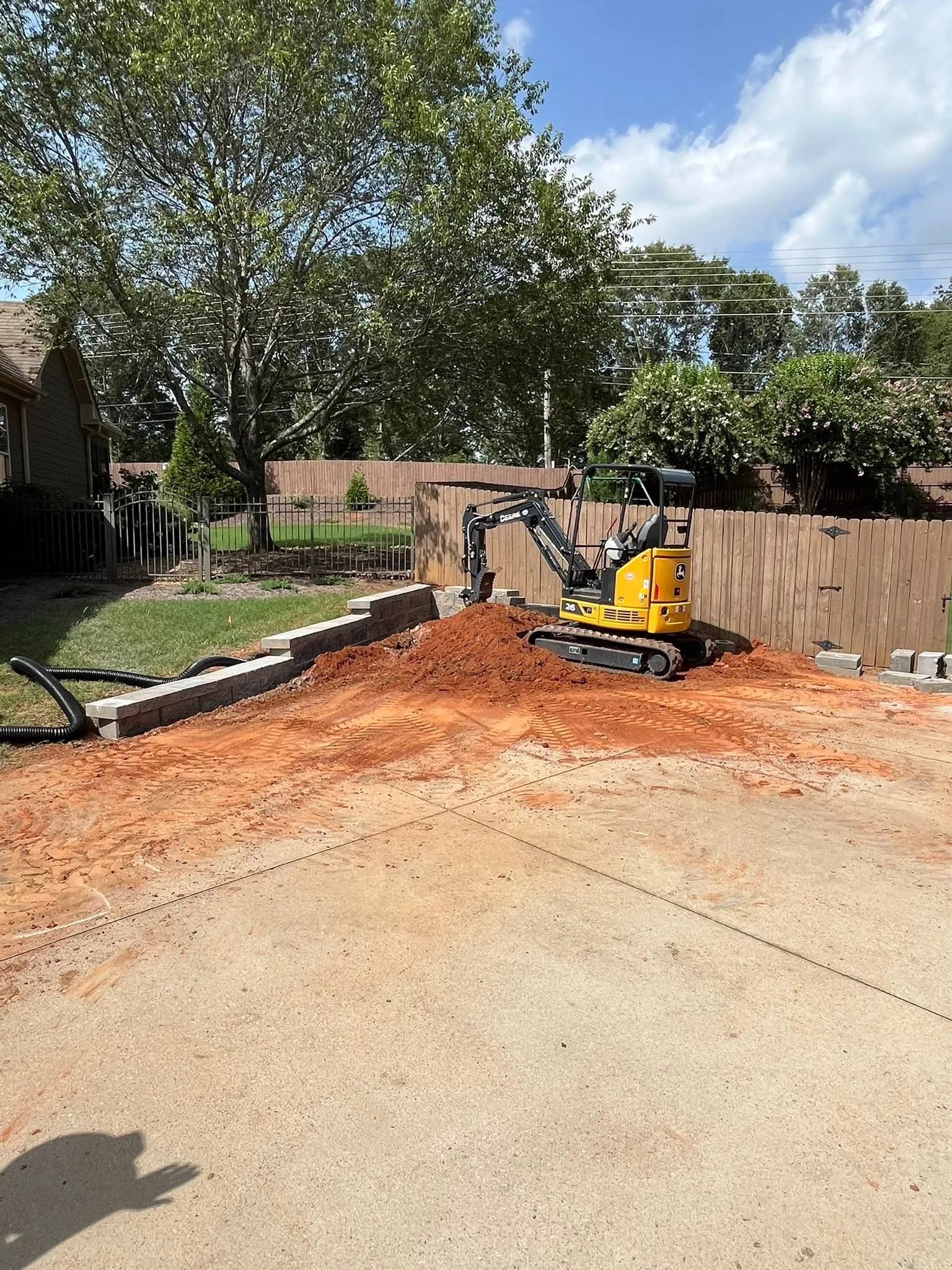
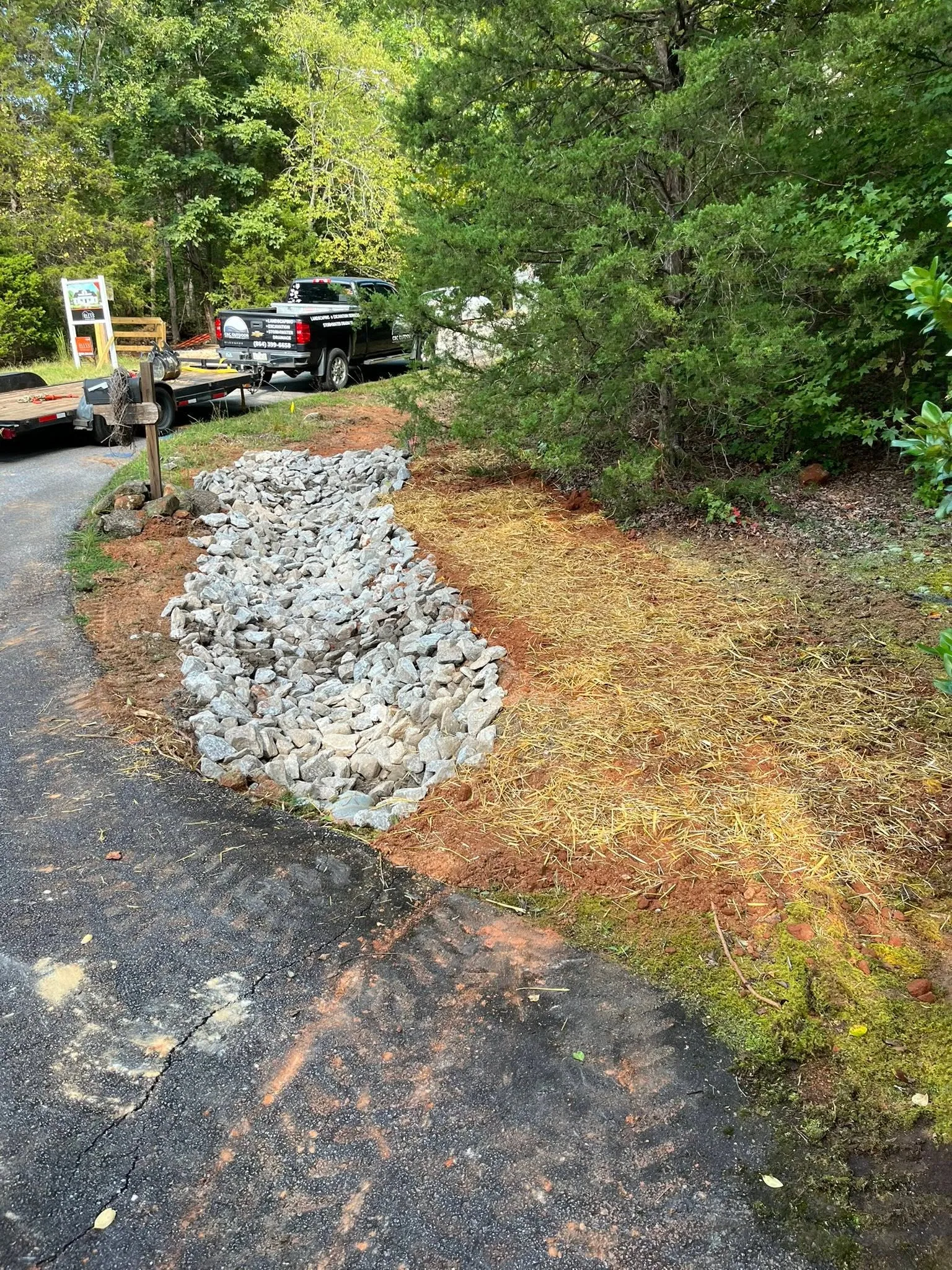
Riprap is a layer of large, angular stone placed over filter fabric to armor soil where water moves with force. It does not wash away the way loose soil or small gravel does, and the gaps between stones slow the water and spread its energy out.
Good spots for riprap installation include pipe and culvert outlets, the bottoms of steep swales, drainage ditch linings and slopes too steep for grass to hold. At a pipe outlet, a short apron of stone keeps discharge from digging a hole that eventually undermines the pipe itself.
The fabric underneath matters as much as the rock on top. Without it, water working between the stones can pull fine soil out from below, and the riprap slowly sinks into a hollow. We grade the area first, lay the fabric, then place stone thick enough for the flow it will face. For stormwater outlets that tie into a larger runoff plan, our stormwater management work covers the system feeding them.
Hydroseeding Greenville SC Slopes and Bare Ground
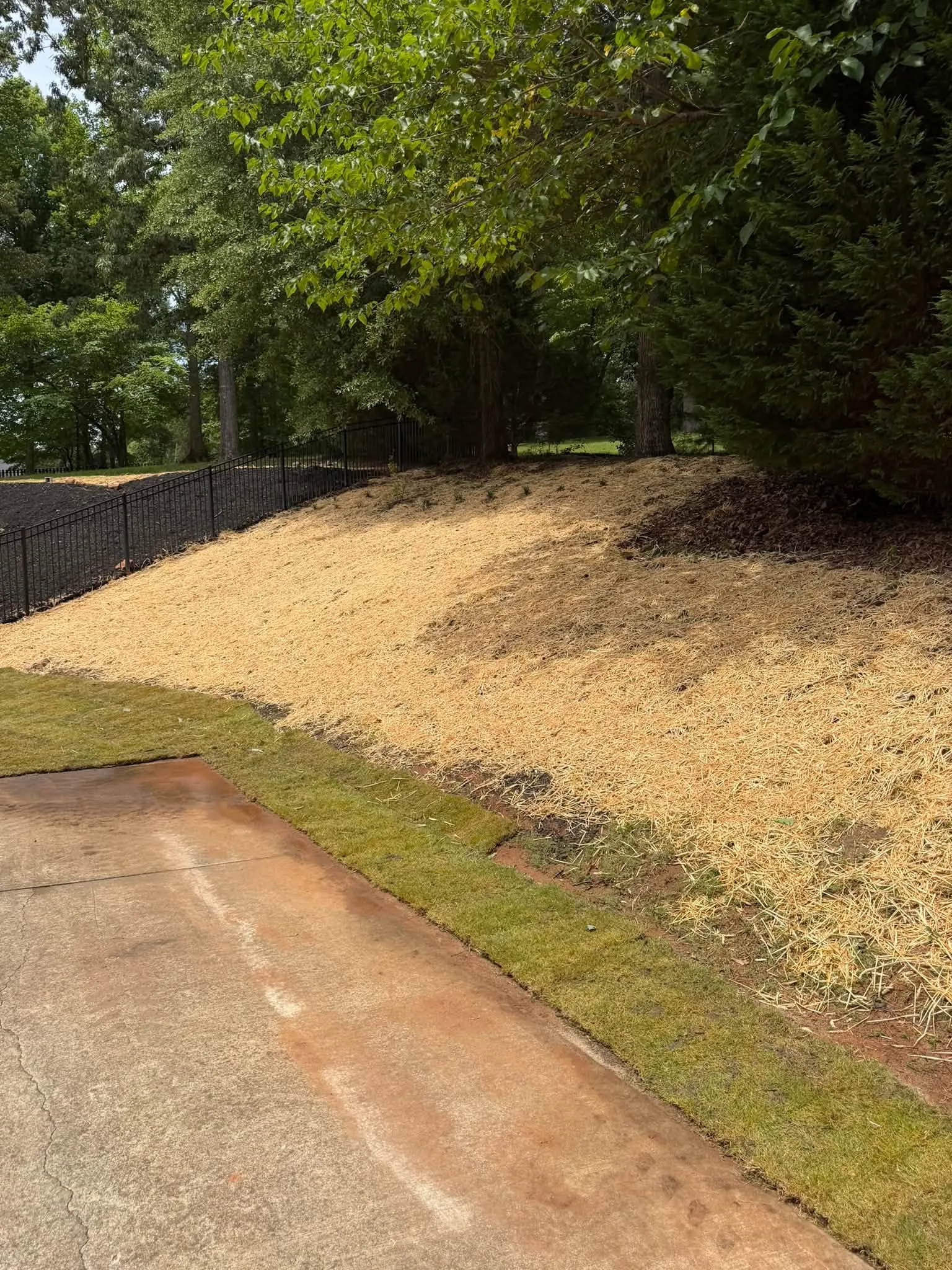
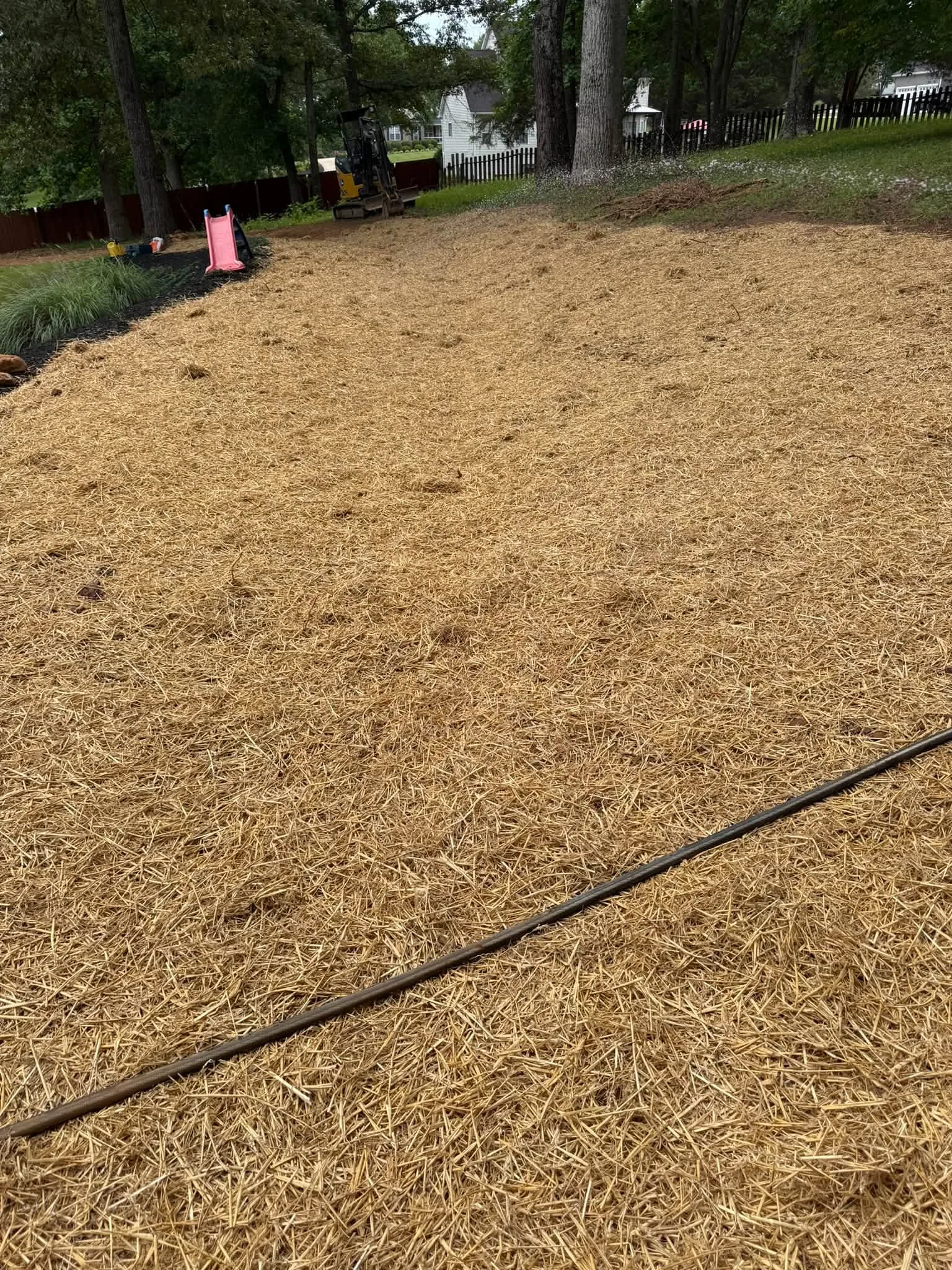
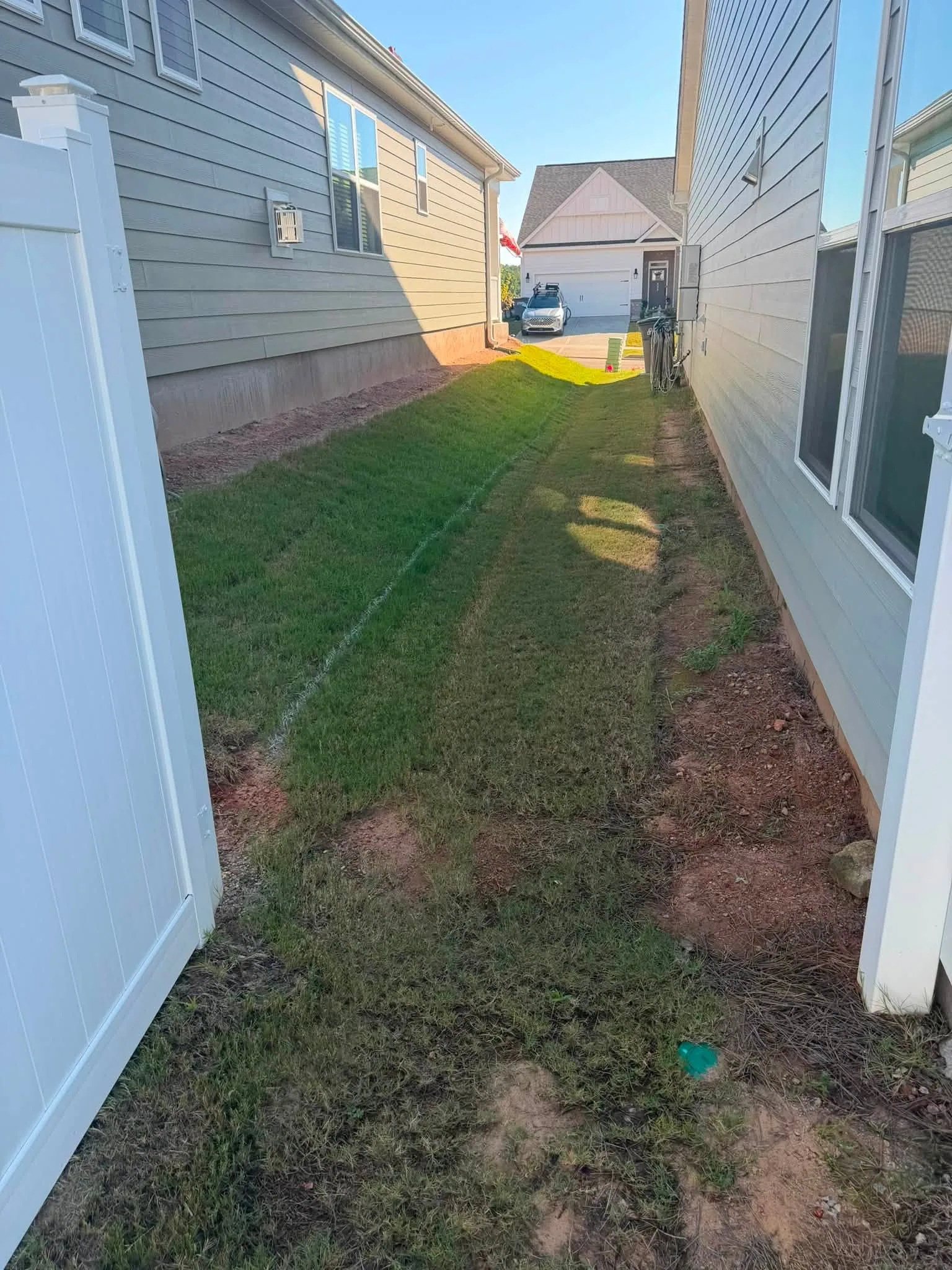
Hydroseeding sprays a slurry of seed, water, mulch fiber and binder across bare soil in one pass. The mulch holds moisture against the seed and the binder helps the mix grip the ground, which makes it a strong choice for slopes and large areas where dry seed and straw would wash or blow away.
For hydroseeding Greenville SC properties, timing matters. Seed chosen for the season and the site germinates fastest, and the slurry needs regular watering until the new grass is up and rooted. On steeper slopes we may pair hydroseed with silt fence at the bottom so any early runoff leaves its sediment behind.
Hydroseeding also costs less than sod across big areas, and it reaches spots that are hard to work by hand. It is a natural finish for grading, drainage installs and construction cleanup, turning raw ground into a lawn or meadow that protects itself.
What Shapes Erosion Control Pricing
The cost of erosion control in Greenville, SC depends on scope, materials and the size of the area. Every estimate is built for the site. The biggest factors include:
- The length of silt fence or area of riprap needed
- Slope steepness and how concentrated the runoff is
- Grading or reshaping required before protection goes in
- Total area to hydroseed and the seed mix chosen
- Equipment access to the slope or ditch
Estimates are always free, and we will explain which methods your site truly needs. A gentle bare patch may need only seed and cover, while a scoured outlet needs stone. Paying for the right protection the first time costs less than redoing a slope after it fails.
Why Hire Our Erosion Control Company
As a family-owned erosion control company with over 25 years of experience in stormwater management, landscaping and hardscape construction, C&C Outdoor Solutions treats erosion as both a water problem and a landscape problem. A stable slope should also look finished. Good erosion control in Greenville, SC leaves healthy cover, not a patchwork of stone and bare dirt.
We favor sustainable materials and methods that last, such as vegetation that roots in and holds the soil on its own. You get an estimated schedule before work starts, so you know whether the project will take a few days or several weeks, and we leave the site clean when the protection is in place. You also get plain advice on watering and upkeep.
Erosion Repair Across the Upstate
Red clay banks, new subdivisions and rural ditches all show up on our schedule for erosion control in Greenville, SC and beyond. We handle erosion repair across Greenville, in our hometown of Simpsonville, and out to Spartanburg and Anderson, plus the rest of the Upstate within about 50 miles.
Erosion rarely stands alone. It often traces back to runoff that needs a better route, which is why erosion work fits within our broader drainage and erosion control services. Fixing both at once gives the new cover its best chance to take hold. A slope seeded below an untreated downspout or culvert will simply wash out again, so we look uphill before we protect anything downhill.
Erosion Questions
Erosion Control FAQs
How long does silt fence need to stay in place?
Silt fence stays until the disturbed soil behind it is stable, which usually means grass or other cover has filled in across the area. That can take several weeks to a full growing season depending on the time of year. Removing it too early lets the first heavy storm carry loose soil off the site, so we check the ground before taking it out.
Is riprap better than grass for stopping erosion?
It depends on how much water the area handles. Grass works well on gentle slopes and spread-out runoff because roots bind the soil. Where water is concentrated, such as below a pipe outlet or in a steep ditch, flow can tear grass out before it roots. Stone over filter fabric holds up in those spots, and many sites use both methods together.
How soon does hydroseeded grass come in?
Germination usually starts within a couple of weeks when the seed mix suits the season and the slurry stays moist. Full, mowable coverage takes longer, often several weeks or more. Regular watering is the biggest factor during that window. The mulch in the slurry protects the seed from washing away, which is why hydroseeding holds up better on slopes than scattered dry seed.
Can erosion on a slope damage my home or hardscape?
Yes, over time. As soil leaves a slope, it can undercut walkways, patios, fence posts and retaining walls, and it can redirect runoff toward a foundation. Sediment also clogs drains and ditches downhill. Stabilizing the slope early with the right mix of grading, cover and stone costs far less than repairing the structures that erosion eventually reaches.
Do builders and developers use your erosion control services?
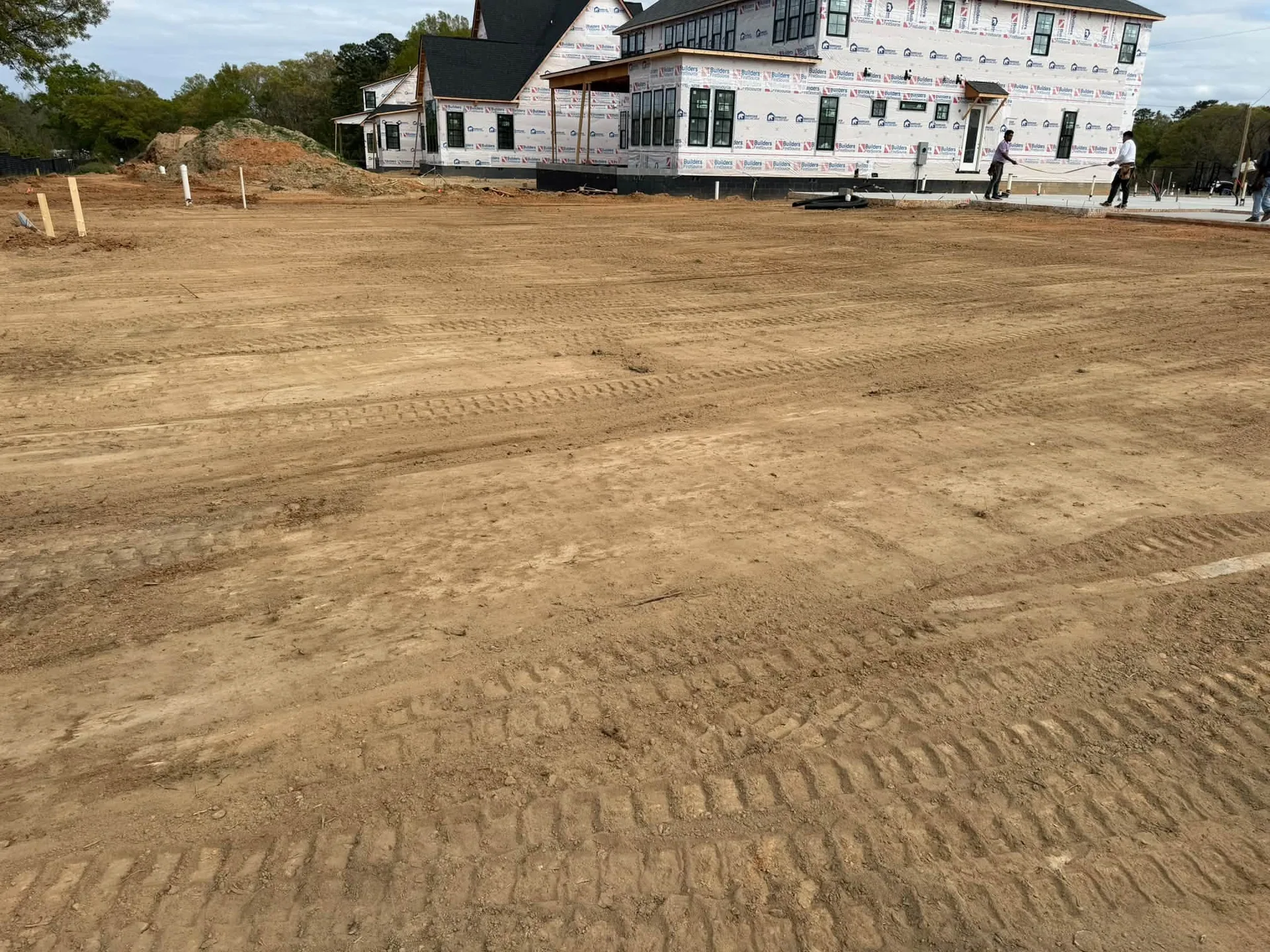
Yes. Graded lots and construction sites leave large areas of bare ground that need protection until the project is finished and landscaped. We install silt fence, stabilize outlets with stone and hydroseed finished grades for commercial and residential projects. Builders can also bring us in at the end of a job to turn raw ground into established cover.

Hold Your Ground
Stop Losing Soil With Every Storm
Every rain that carries away topsoil makes the slope steeper and the repair larger. Call C&C Outdoor Solutions, Monday to Friday, 8:00 AM to 5:00 PM, and we will look at the eroding ground with you and recommend the protection that will actually hold.