
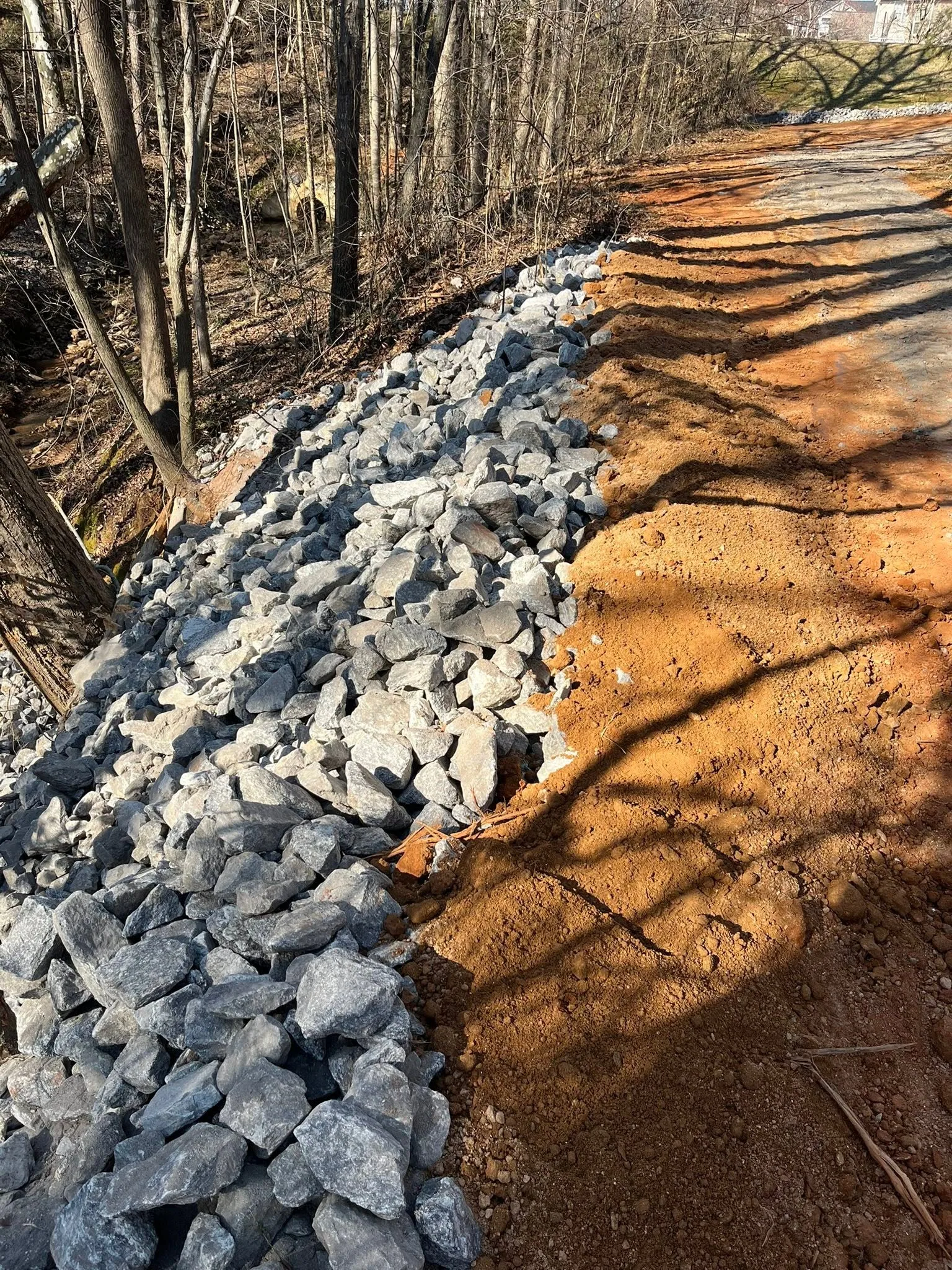
Riverbank and Creek Bank Repair
Riverbank Repair in Greenville SC for Eroding Creek and Stream Banks
Rebuilt, armored and replanted banks for Upstate properties along creeks, streams and rivers, planned by a family-owned team with over 25 years in stormwater work.
Riverbank Repair in Greenville SC for Land Along Moving Water
C&C Outdoor Solutions provides riverbank repair in Greenville SC for homeowners, farms and businesses whose land borders a creek, stream or river. Moving water works on a bank every day, and each flood pulls a little more soil from the toe of the slope. Left alone, the bank steepens, slumps and carries trees, fences and lawn into the channel.
Bank repair is one part of our drainage and erosion control services, and it differs from the upland work in that the water does not stop. The repair has to hold against current, not just rain.
Bank repairs take us from our Simpsonville, SC, base to Greenville, Spartanburg, Anderson and waterways across the Upstate within about 50 miles. Call (864) 399-6658 to have a bank looked at before the next high water.
Signs Your Creek Bank Is Losing Ground
Bank failure is usually gradual, then sudden. The early signs are easy to miss from the yard but plain from the water's edge.
- A vertical or overhanging bank with bare soil at the bottom
- Tree roots hanging exposed over the water
- Cracks in the ground running parallel to the bank
- Fence posts, steps or a path leaning toward the creek
- Soil and sand piling up on the inside bends downstream
- The channel visibly wider than it was a few years ago
Upstate subsoil is mostly red clay, which can stand at a steep face for a while and then let go in large blocks once the toe washes out. When cracks appear behind the edge, the next high water can take a sizable piece of the yard at once.
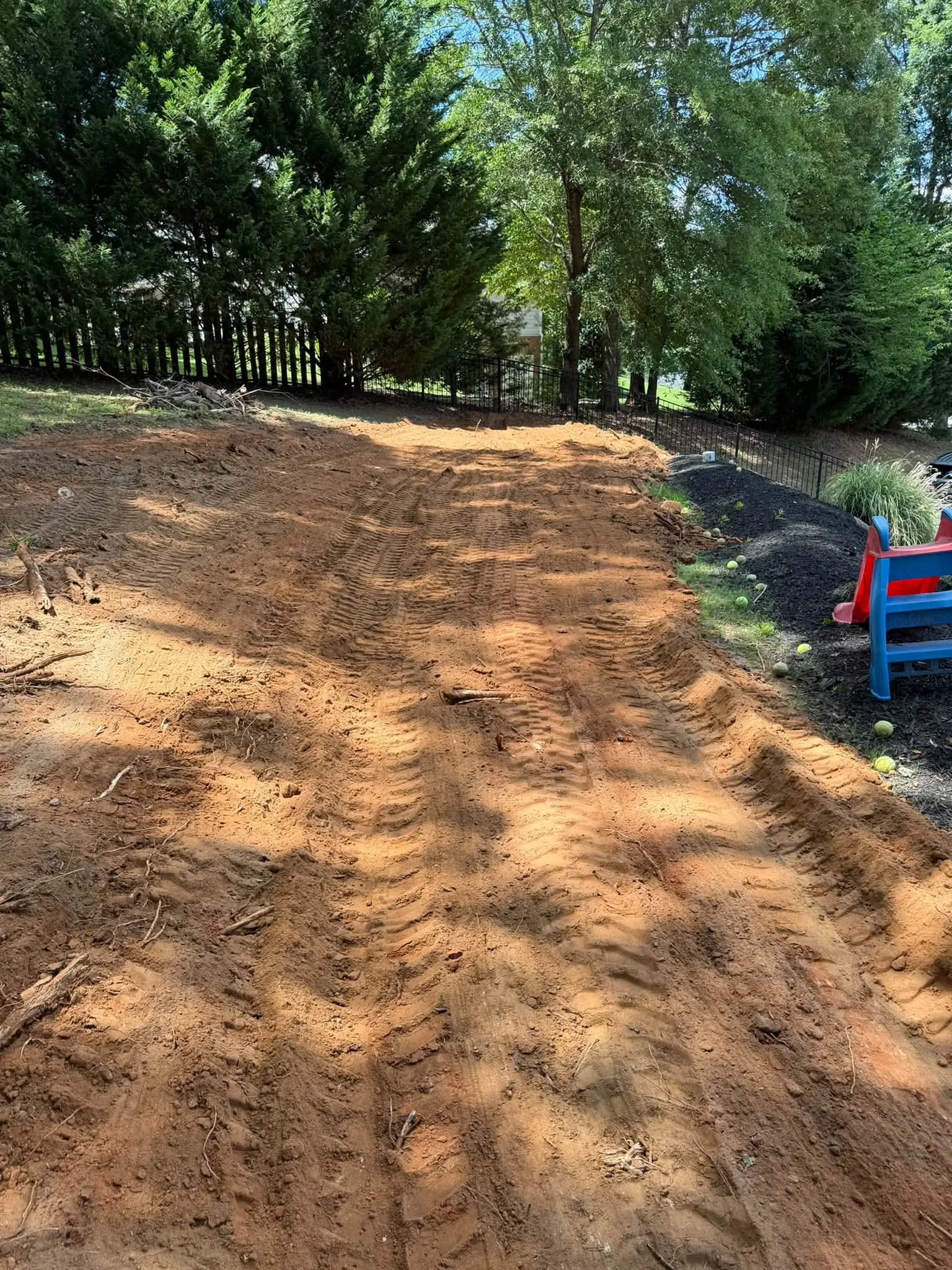
Our Bank Repair Process From Assessment to Replanting
Every stream behaves a little differently, so the repair starts with how the water moves past your property. The order of work keeps the bank stable at each stage.
-
Step 1
Study the Channel and the Bank
We look at the bend, the current at high water, the bank height and what is failing first. The free estimate sets out the scope and an estimated schedule.
-
Step 2
Confirm Permit Needs
Work along a stream can fall under the U.S. Army Corps of Engineers permits for bank stabilization. That question is answered before any stone or machine reaches the water.
-
Step 3
Rebuild the Toe and Reshape the Slope
The base of the bank is rebuilt first, since that is where failure starts. The slope above is then laid back to an angle that can hold.
-
Step 4
Armor, Plant and Protect
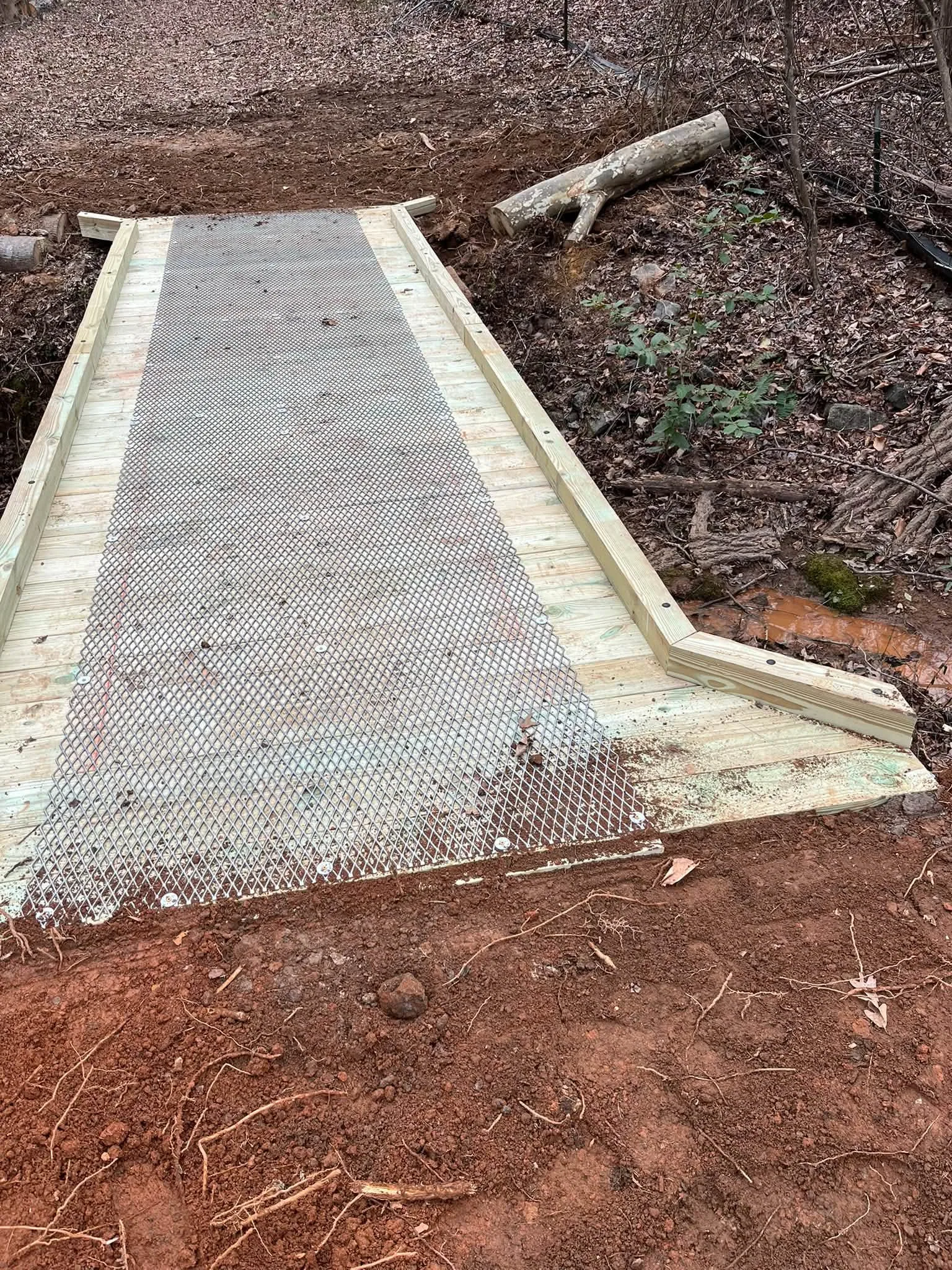
Stone, fabric and plantings are placed for the current at that spot, and disturbed ground is covered right away so rain cannot wash it into the creek.
Streambank Stabilization That Holds in High Water
Streambank stabilization works by protecting the part of the bank the water hits and giving the rest a shape it can keep. The outside of a bend takes the most force, so that is where the heaviest protection goes. Straight runs and inside bends often need far less.
The toe, where the bank meets the streambed, is the key. If the toe is armored and keyed into the bed, the slope above it has a firm base. A laid-back slope, with a gentler angle than the steep cut the water left behind, is less likely to slump and gives roots a chance to take hold.
For slower water, live plantings and erosion fabric can do much of the work on their own. In faster water, stone at the toe with plantings above is usually the more durable choice. We match the method to the stream rather than using one design for every bank.
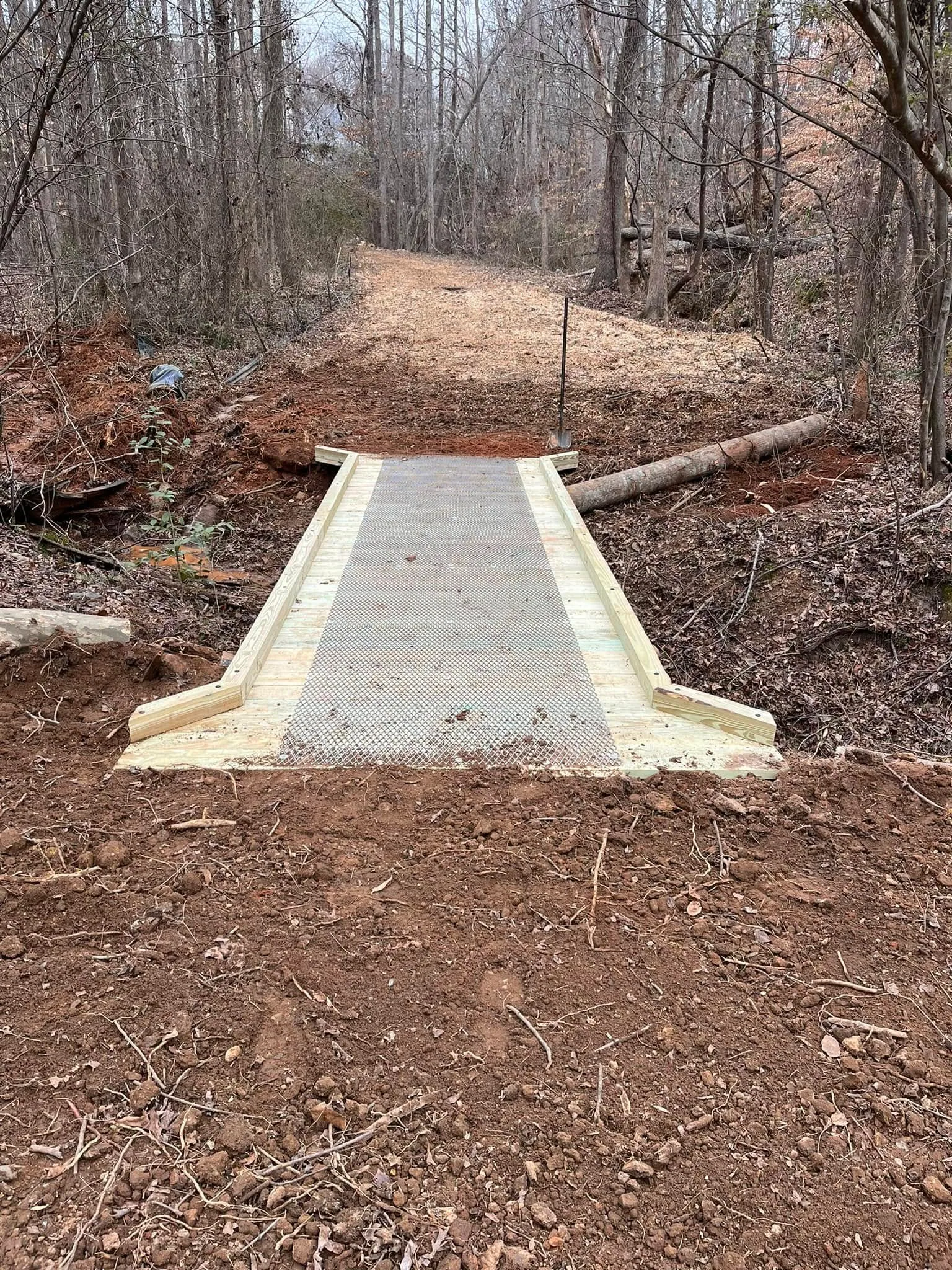
Riprap for Creek Banks Under Strong Current
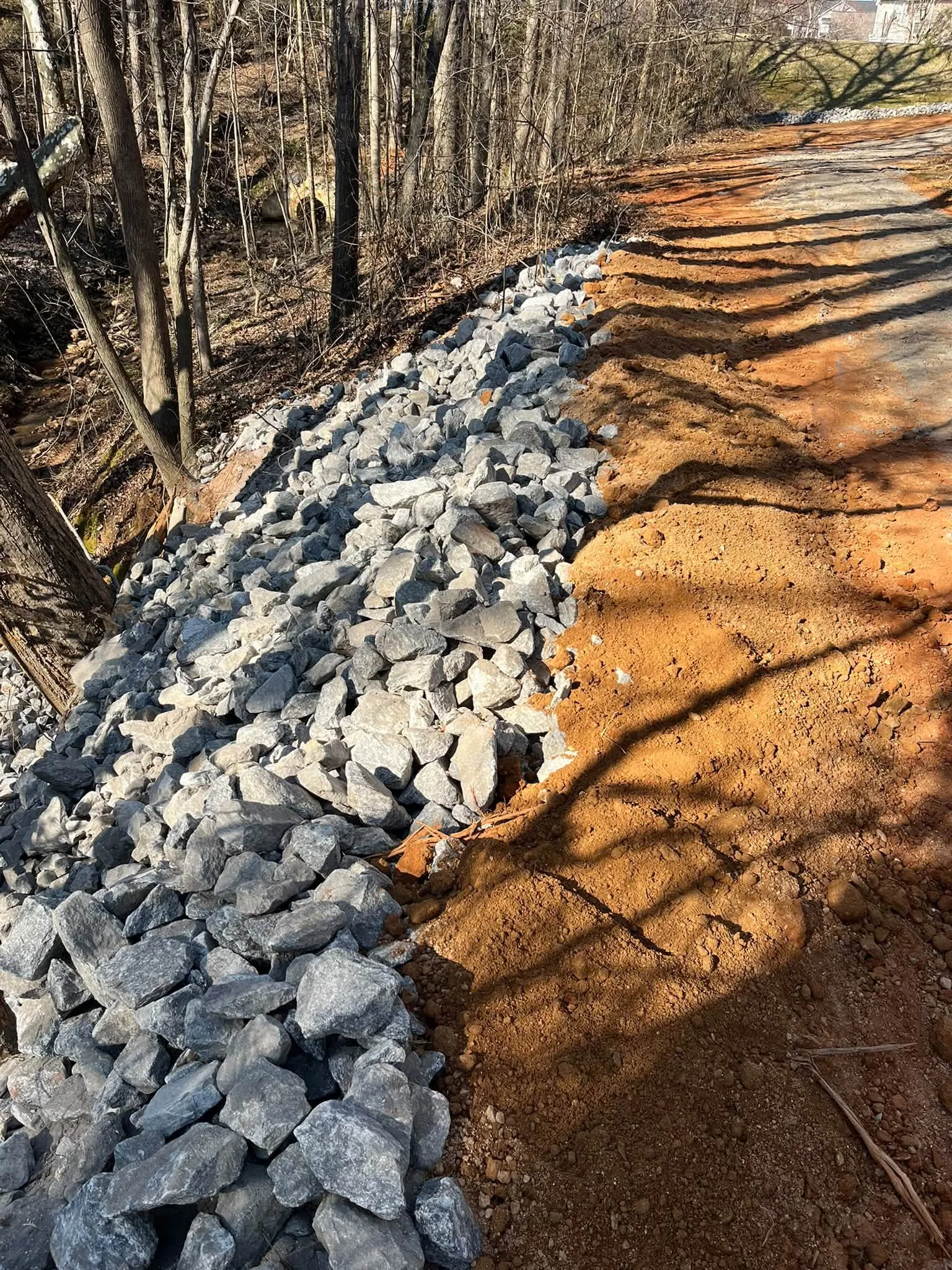
Riprap for creek banks is a layer of large, angular stone placed over fabric to take the force of moving water. The fabric keeps the soil from washing out between the stones, and the angular shape lets the rocks lock together instead of rolling downstream.
Stone size is chosen for the current. Small stone that looks tidy on a calm day can be carried off in the first flood, so the rock on a fast creek is larger than many owners expect, and it is placed by machine rather than dumped. The layer is keyed into the streambed at the toe and carried up the bank as high as floodwater regularly reaches.
Riprap also suits the outlets of pipes and ditches that empty into a creek, where a concentrated stream of water can scour a hole in the bank. Our erosion control work covers the silt fence, seeding and slope protection on the ground above the water.
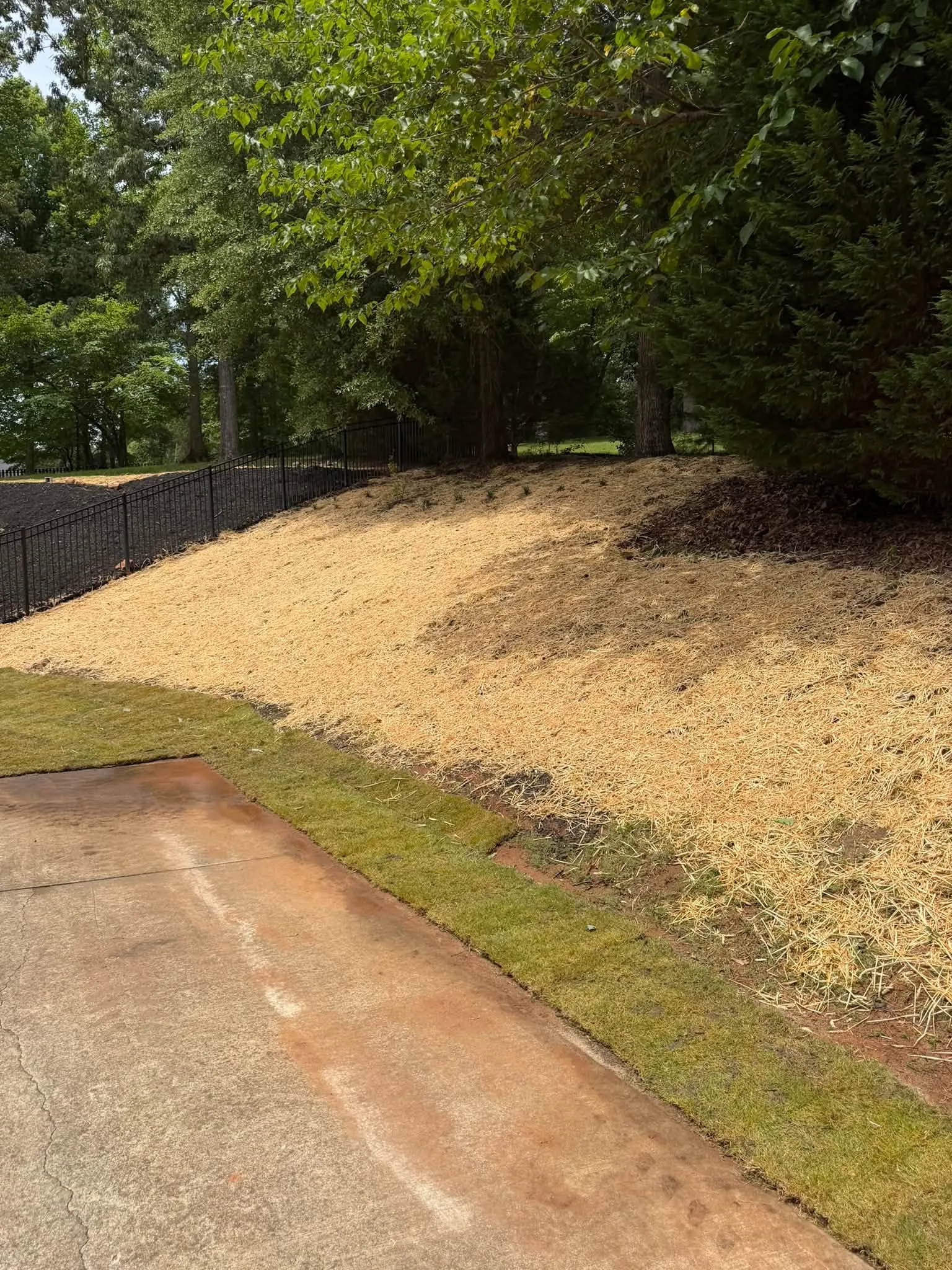
Creek Bank Erosion Repair on Ponds and Lake Shores
Creek bank erosion repair and shoreline erosion control share the same idea: stop the water from undercutting the edge. Lake and pond shores face waves and rising and falling water rather than current, and that wears a notch along the waterline that slowly works back into the yard.
Along larger lakes such as Lake Hartwell, wind and boat wakes add to the wear. On private ponds, the usual culprits are bare banks, foot traffic and a poorly placed overflow. The fix combines a protected toe along the waterline, a gentler slope above it, and plantings or stone where the water reaches.
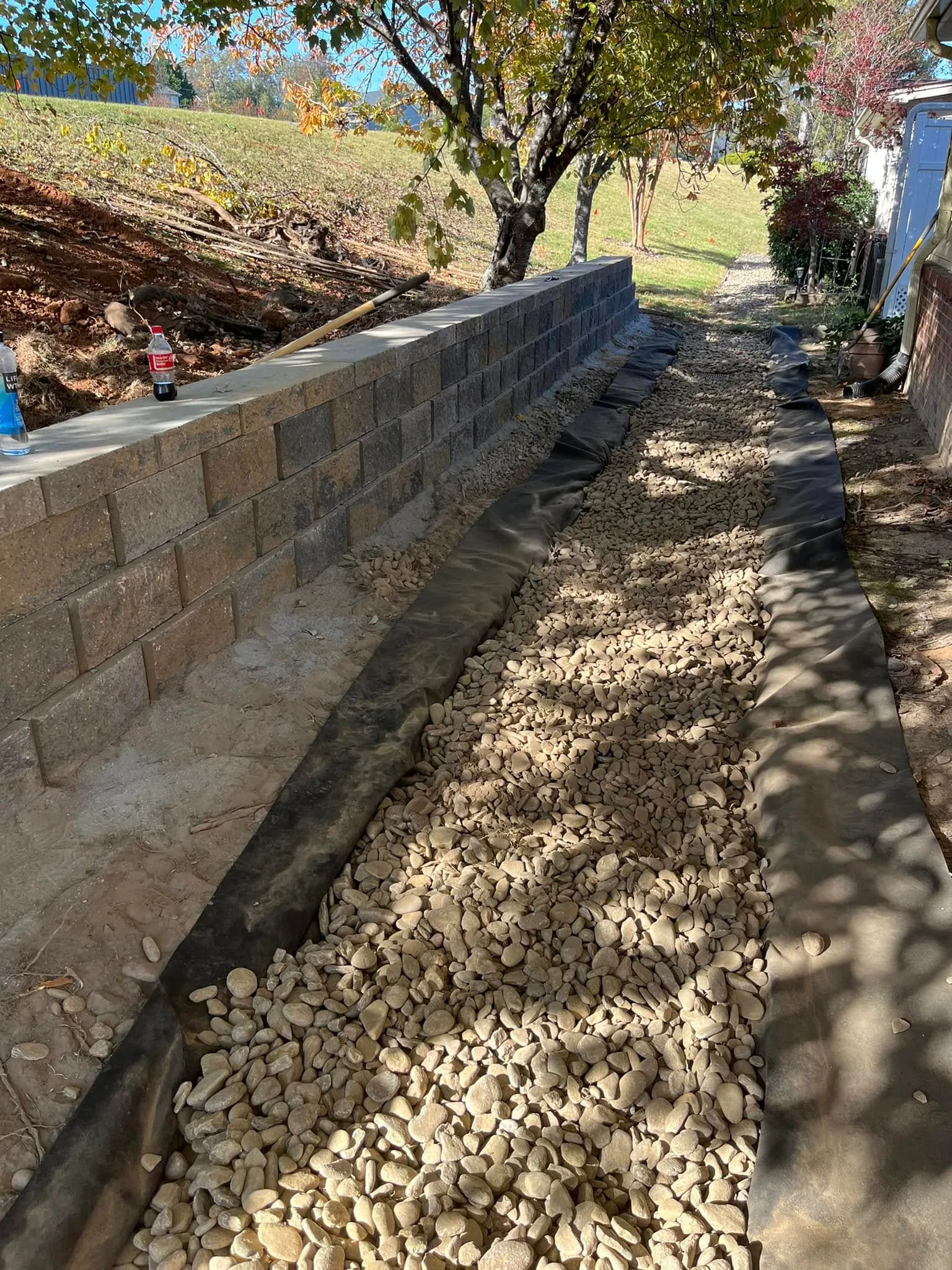
Upstream runoff also matters. When a yard or parking area sends a rush of water straight over the bank, the bank erodes from the top down, so we look at stormwater management above the bank as part of every riverbank repair in Greenville SC.
What Affects the Cost of Riverbank Repair
Bank repair is priced after a visit, since stream size, access and soil vary so much from one property to the next. A short, low bank on a quiet creek and a tall cut on a fast stream are very different jobs, even when both are called riverbank repair in Greenville SC. The main factors:
- The length and height of the eroded bank
- The speed of the water and the stone size it calls for
- Equipment access to the water's edge
- Fill needed to rebuild the lost slope
- Fabric, plantings and covering for disturbed ground
- Any permit work the project requires
Smaller bank repairs can take a few days, while long reaches can take several weeks. We give you an estimated schedule with the free estimate before work begins, and work near water is planned around the forecast.
Why Waterfront Owners Choose C&C Outdoor Solutions
Bank repair sits where erosion control, grading and stormwater management overlap, and our team has spent over 25 years in that work. We read the stream, the slope and the runoff above it together, because fixing only one tends to move the problem a few yards downstream.
As a family-owned business, we value lasting relationships with customers and explain the options in plain language, including when plantings alone are enough and when stone is needed. Our commitment to sustainable methods means favoring stable slopes and native cover wherever the current allows.
Every disturbed area is covered and stabilized before we leave, so a repair does not send more soil into the creek it is meant to protect. That care is the difference between a bank that heals and one that keeps slipping.
Bank Repair Across Greenville, Simpsonville, Spartanburg and Anderson
The Upstate is laced with creeks and rivers, from the Reedy River that runs through downtown Greenville to the lake shores of Anderson County. Working out of Simpsonville, we repair banks across the region within about 50 miles. Many owners first call about riverbank repair in Greenville SC after a spring or summer flood takes a slice of the yard, and the earlier the visit, the smaller the repair.
Find our local drainage work in Greenville, Simpsonville, Spartanburg and Anderson. Backyard creeks in older neighborhoods, farm streams and commercial frontage each get a repair planned for the water they face. The stone size, slope and plantings change from one site to the next, because no two stretches of water push on a bank the same way.
Bank Repair Questions
Riverbank and Creek Bank Questions From Upstate Owners
Do I need a permit to repair the bank of a creek on my property?
Often, yes. Placing stone or fill in or along a stream can require authorization from the U.S. Army Corps of Engineers, which issues permits for bank stabilization work. Whether a specific project needs one depends on the stream and the scope. We sort out that question at the start, before any work happens at the water's edge, so the repair is not delayed later.
Can plants alone stop my creek bank from eroding?
On slow, small streams with gentle banks, deep-rooted plantings and erosion fabric can be enough. On fast water, steep banks or the outside of a bend, roots alone usually cannot hold against floods until they mature, and they need stone at the toe. Many repairs combine both, with stone where the current hits and plantings everywhere above it.
Why does the bank keep caving in even after I fill it with dirt?
Loose soil dumped on a failing bank has nothing holding it, so the next high water carries it off, often along with more of the original bank. The failure starts at the toe, under the waterline. A lasting repair rebuilds and protects that base first, then shapes the slope above to an angle the soil can keep.
Will a bank repair change how the creek flows past my neighbors?
A good repair protects your bank without pushing the current into someone else's. That is why we avoid narrowing the channel and shape protection to follow the natural line of the stream. Hard structures that jut into the water can redirect flow, so we keep the repaired bank in line with the banks upstream and downstream.
Protect Your Waterfront
Stop Losing Your Yard to the Creek
Every flood takes more of an unprotected bank, and the repair grows larger each season it waits. A stable toe and a shaped slope keep your land where it is. Call us or request a visit, and we will walk the bank with you and explain what it needs.