Ponds
Pond Construction in Greenville SC for Homes, Farms and Businesses
Designed, dug and maintained ponds for Upstate properties, from small backyard ponds to farm ponds, built by a family-owned team that knows how water moves across the land.
Pond Construction in Greenville SC, From First Sketch to Full Pool
C&C Outdoor Solutions offers pond construction in Greenville SC for homeowners who want water in the landscape, landowners who need a farm pond, and businesses that want a pond as part of a property. We also clean and care for existing ponds, including algae control, so an older pond can be brought back rather than filled in.
A pond is a drainage project at heart: it has to collect the right amount of water, hold it, and release the overflow safely. That is why pond work sits within our drainage and erosion control services, backed by over 25 years in stormwater management, landscaping and hardscape construction.
From our base in Simpsonville, SC, we build ponds across Greenville, Spartanburg, Anderson and the rest of the Upstate within about 50 miles. Call (864) 399-6658 to talk about your site.
Signs Your Pond Needs Attention or Your Land Is Ready for One
Some calls are about a pond that is struggling; others are about a low, wet corner that might make a good one. Both start with the same questions about water, soil and slope.
- Green, cloudy water or thick mats of algae through the summer
- A water level that drops well below normal between rains
- Shallow edges filling with silt and weeds
- An eroding dam face or a washed-out overflow
- A low area of the yard or pasture that already holds water after storms
Many owners who start by searching for pond builders near me find the most useful first step is a site visit. For pond construction in Greenville SC and nearby counties, the good news is that red clay can hold water well when it is properly compacted, but sandy pockets, slopes and runoff patterns decide whether a spot will work.
Our Pond Building Process From Site Visit to Fill
A pond that holds water and stays healthy is planned before it is dug. Each project follows the same sequence, whatever its size.
-
Step 1
Assess the Site and Its Water Source
We look at the soil, the slope, the area draining to the spot and where overflow can go. Your free estimate spells out the pond size, the work involved and an estimated schedule.
-
Step 2
Shape the Design
Depth, shape, shelves and the overflow are planned for how you will use the pond, whether for looks, livestock or wildlife.
-
Step 3
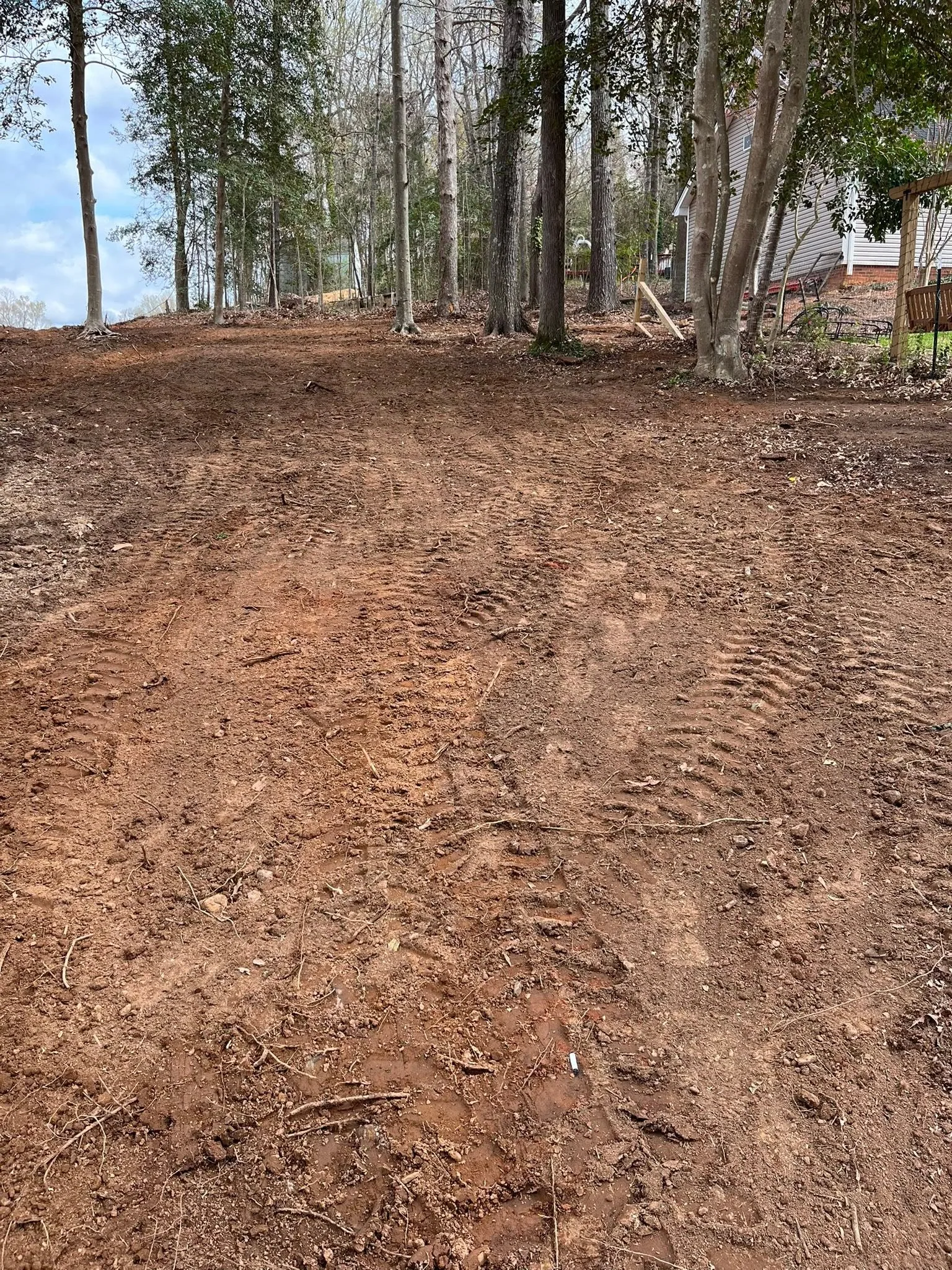
Excavate and Build the Basin
The basin is dug and the banks or dam are built up in compacted layers. Any liner the site requires goes in before the pond is filled.
-
Step 4
Stabilize the Banks and Fill
Banks are covered with seed, plants or stone above the waterline, and the overflow is armored before the pond fills with rain or runoff.
Custom Pond Design for Backyards and Properties
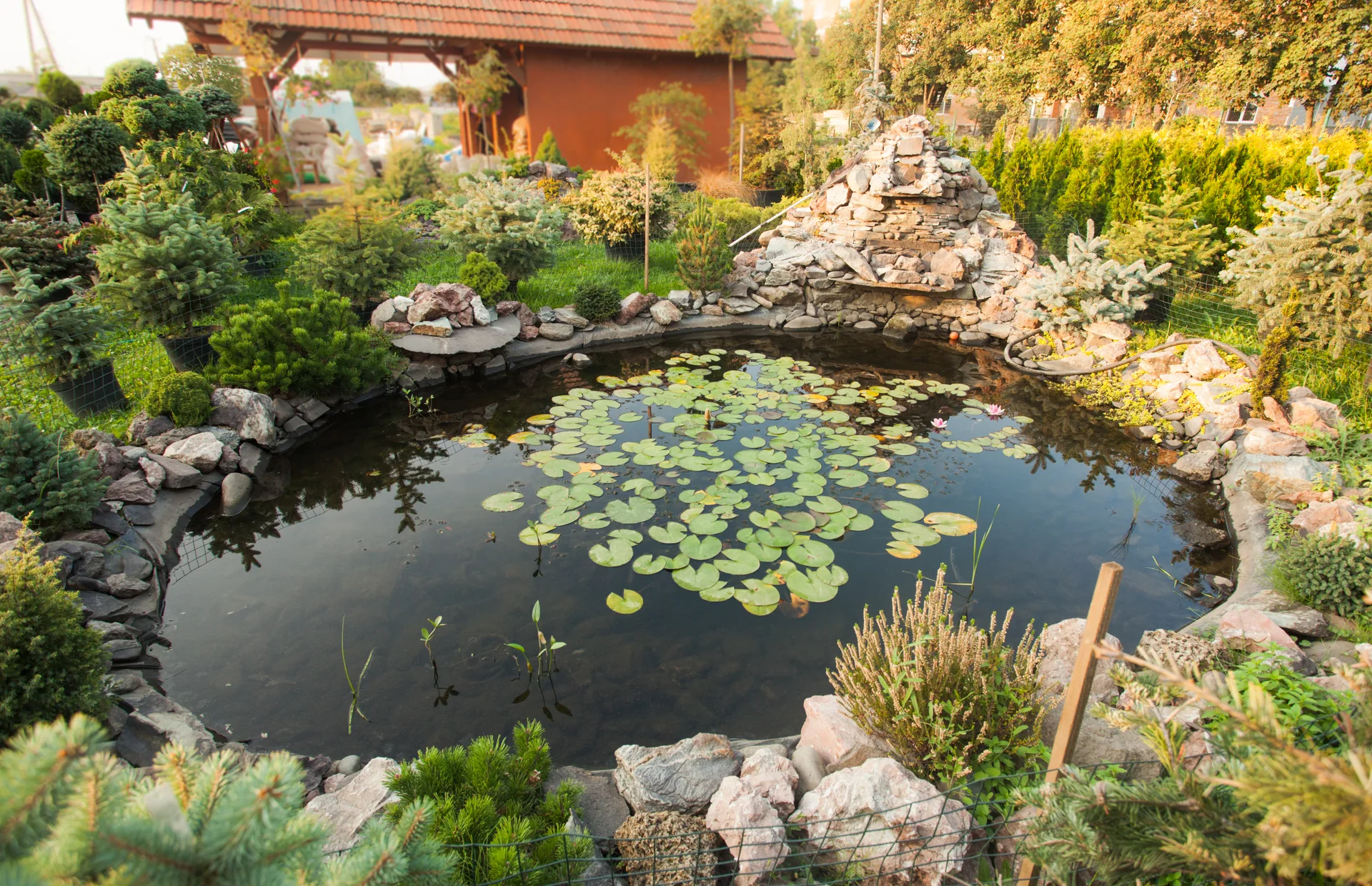
Custom pond design starts with how you want to use the water. A small backyard pond might be built for fish and plants beside a patio. A larger pond on acreage might frame a view from the house or create habitat for wildlife. Each use changes the depth, the edge shape and how the overflow is handled.
Shallow shelves along the edge give room for water plants, while a deeper center helps keep the water cooler in summer. Gentle banks make the pond safer and easier to mow around, and a stone edge can keep a busy shoreline from wearing down. The shape is drawn to fit the land rather than forced onto it, so the finished pond looks as though it has always been there.
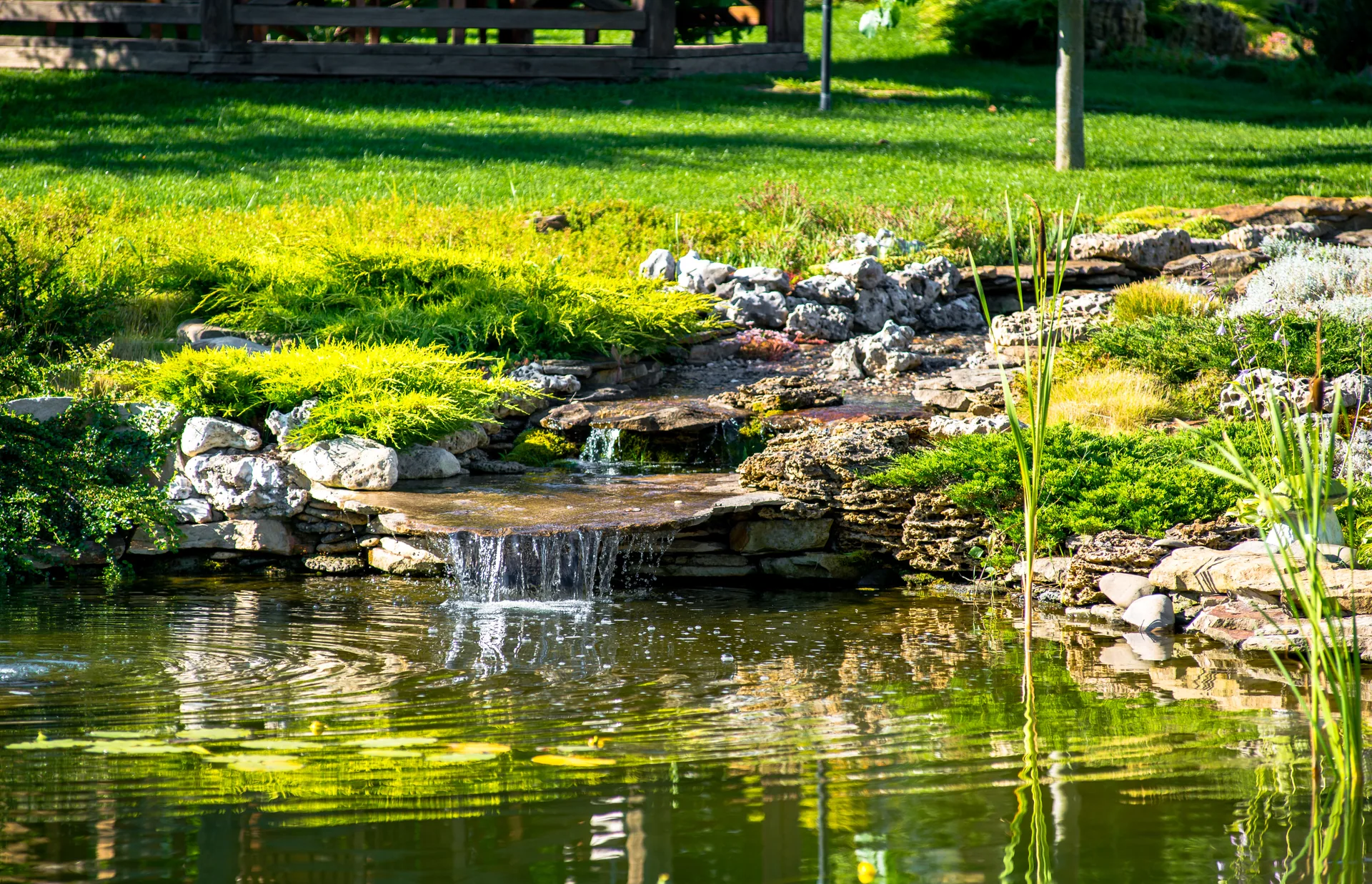
Many owners want moving water too. A pond can be paired with one of our waterfalls and fountains, which add sound and help circulate the water.
Farm Pond Construction for Land and Livestock
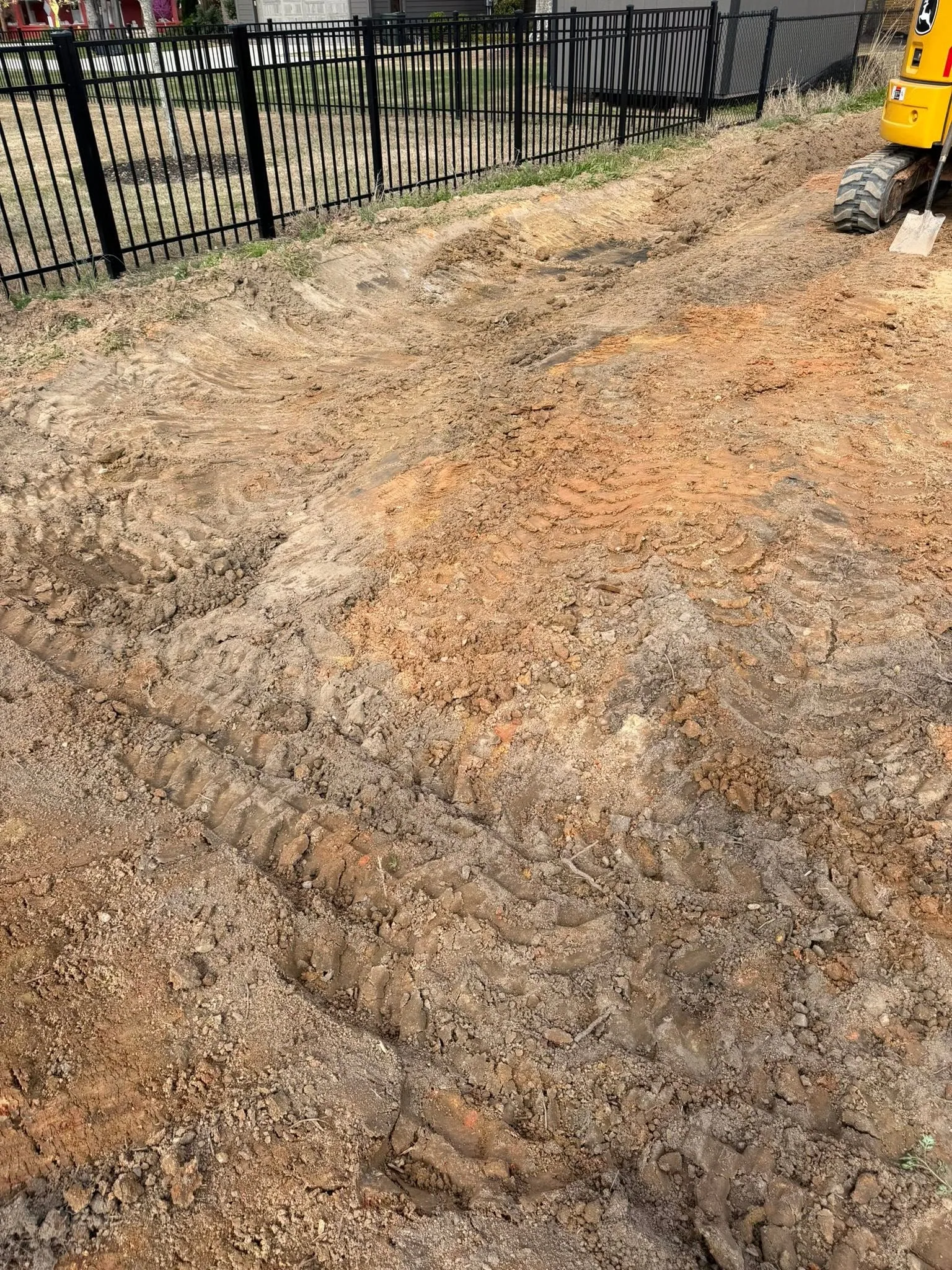
Farm pond construction is a larger build with a practical purpose: holding water for livestock, irrigation or wildlife on rural land. The work usually involves a compacted earthen dam across a natural draw, a spillway that carries storm overflow around the dam, and a basin sized to the land that drains into it.
Site selection matters most. A good farm pond site has enough drainage area to keep it full, soil that will hold water, and a safe path for overflow that does not wash out the dam or a neighbor's land. We check all three before any digging starts, and the grading and excavation for the basin and dam is handled by our own team.
The dam face and spillway are seeded or armored as soon as they are built, because bare soil on a new dam is the most likely place for erosion to start. Farm pond construction is one of the larger jobs we handle, so the schedule is set with you before work begins.
Pond Maintenance, Cleaning and Algae Control
Pond maintenance keeps a pond from slowly filling in and turning green. Every pond collects silt, leaves and nutrients from the land around it, and over time the shallow edges fill, weeds spread and algae blooms grow thicker each summer.
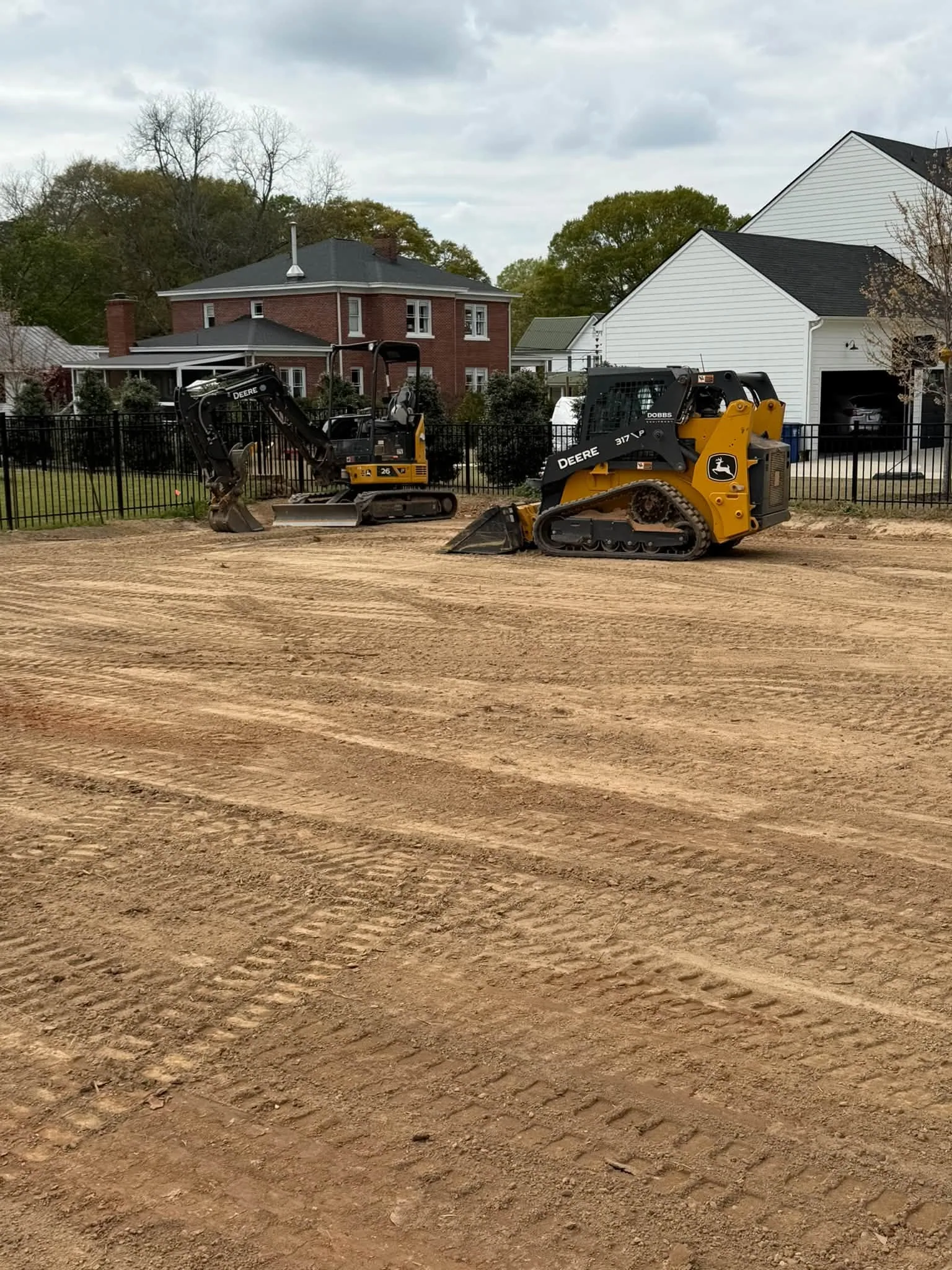
Pond cleaning removes built-up muck and sediment to restore depth, clears debris from the overflow and repairs eroded banks. Algae control works on the causes as well as the bloom itself, since runoff carrying fertilizer and soil feeds the problem. Improving circulation, stabilizing bare banks and redirecting runoff can all reduce how often the water turns, which cuts down on repeat treatments.
Older ponds that were never built with an overflow or bank protection can often be improved during cleaning, so the work lasts longer between visits. Adding a stable outlet and planted banks to a tired pond often does as much good as the cleaning itself.
What Affects the Cost of Building or Maintaining a Pond
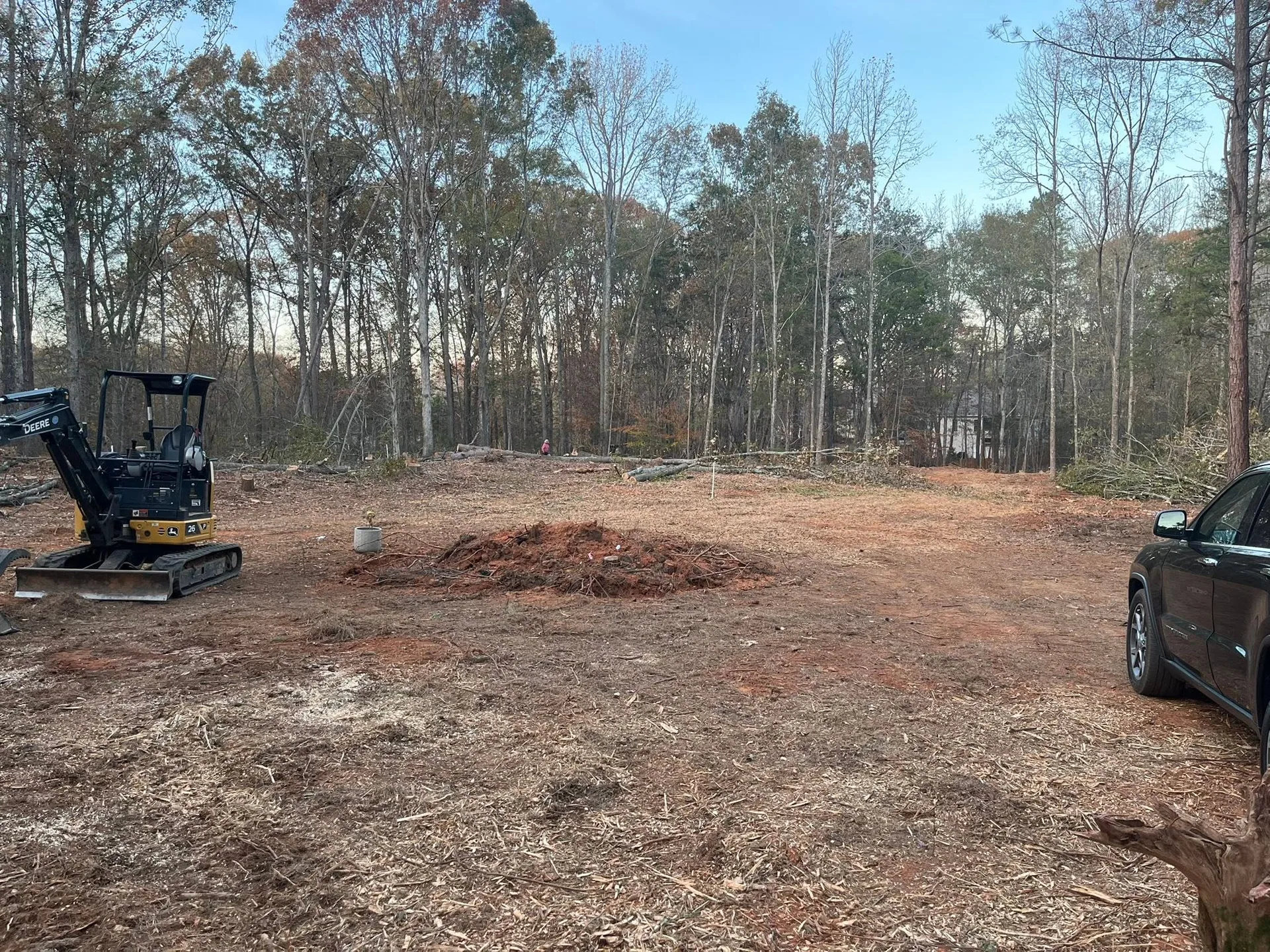
Ponds are priced after a site visit, since size and soil change the job more than anything else. A small backyard pond and a farm pond both count as pond construction in Greenville SC, but they share little beyond the name. The factors we look at:
- The surface area and depth of the pond
- The volume of soil to dig, move and compact
- Whether the soil holds water or a liner is needed
- The overflow or spillway and any pipe it requires
- Equipment access to the site
- For existing ponds, the amount of sediment to remove
A small pond or cleaning can take a few days, and a large farm pond can take several weeks. You get an estimated schedule with your free estimate.
Why Landowners Choose C&C Outdoor Solutions for Ponds
Building a pond calls for the same skills as stormwater and grading work: reading the land, moving soil and controlling where water goes. Our team brings over 25 years in that work, so the pond is designed to handle a storm as well as a dry spell.
We are a family-owned business that builds lasting relationships with customers, which suits ponds well, since many need care for years after they are dug. Our commitment to sustainable materials and methods shows in stable, planted banks and overflows built to protect the land below.
Homeowners, farm owners and commercial property managers all get the same planning, whether the pond is a small feature or a larger body of water. Each one starts with the same questions about soil, slope and where the overflow will go.
Pond Work Across Greenville, Simpsonville, Spartanburg and Anderson
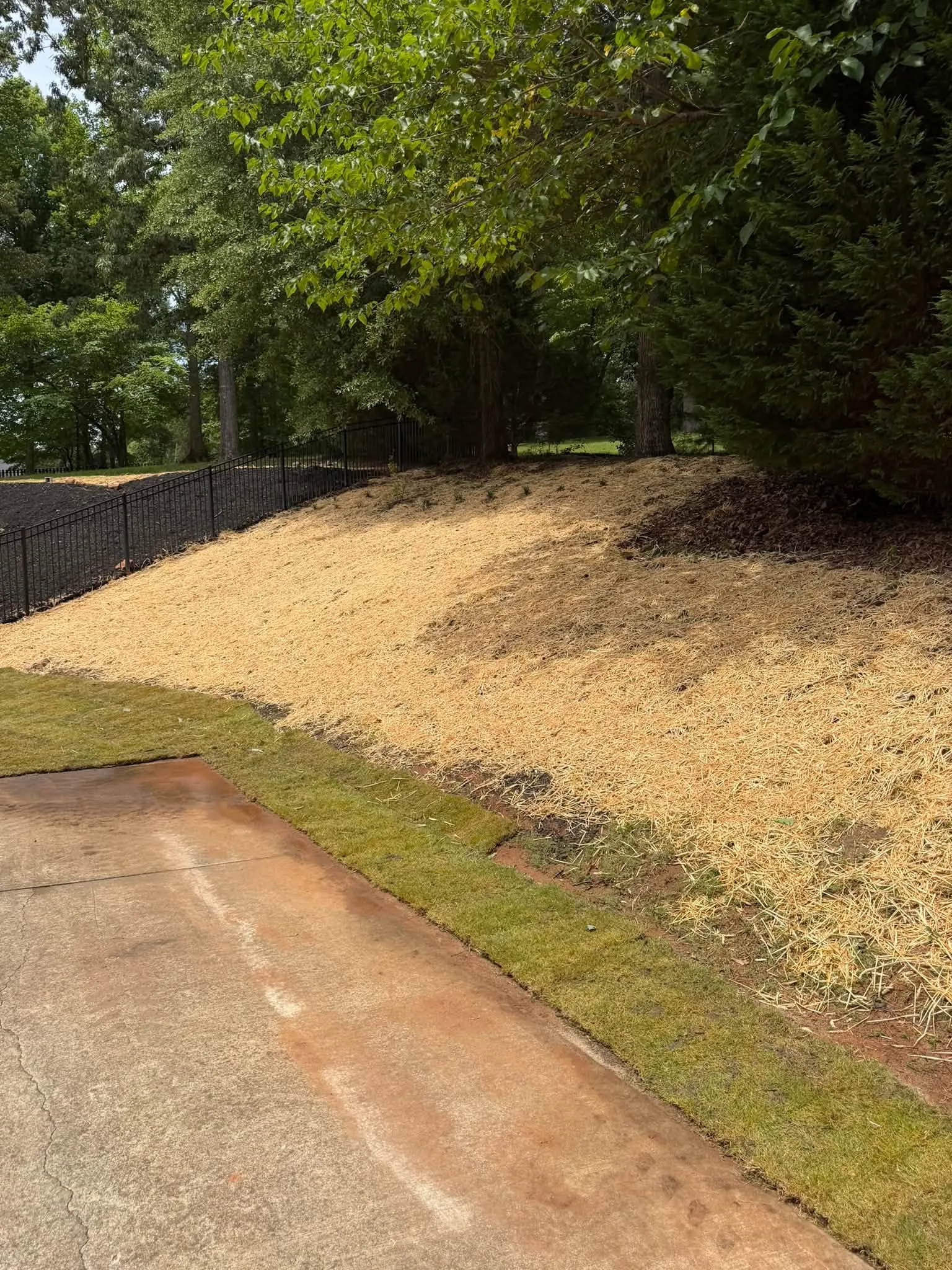
Upstate land ranges from wooded lots near Greenville to open acreage farther out in the counties, and ponds suit both. Working from Simpsonville, we build, clean and maintain ponds for owners within about 50 miles. Rolling Piedmont terrain and clay subsoil make many properties here good candidates, as long as the site is chosen with care and the overflow has a safe path downhill.
Learn about our local work in Greenville, Simpsonville, Spartanburg and Anderson. Each site visit, from a suburban backyard to open pasture, starts with the soil and the water source, since those decide what kind of pond the property can support. If you are weighing pond construction in Greenville SC or in a nearby town, the visit and estimate cost nothing.
Pond Questions
Pond Building and Care Questions From Upstate Owners
Will my pond hold water without a liner?
Many Upstate sites have clay-rich subsoil that holds water well once it is compacted in layers. Sandy or rocky spots, or soil with gravel seams, may leak and need a clay core or a liner. We check the soil at the pond site before design is final, so the choice between compacted clay and a liner is made on what is actually in the ground.
How deep should a backyard or farm pond be?
The right depth depends on use. A decorative backyard pond can be fairly shallow with plant shelves, while a fish or farm pond needs a deeper area to stay cooler in summer and keep water through dry spells. Shallow edges should be limited so weeds do not take over. We set depths for your goals during design.
What causes algae, and can it be stopped for good?
Algae feeds on nutrients and sunlight, so runoff carrying fertilizer, grass clippings and soil is a common cause. Shallow, still water warms quickly and makes blooms worse. Algae can rarely be eliminated, but it can be kept in check by reducing nutrient runoff, adding circulation, removing built-up muck and keeping the banks planted and stable.
How often does a pond need to be cleaned out?
It varies with the land around the pond. A pond fed by a wooded or grassy area may go many years between cleanings, while one that receives runoff from bare ground or construction fills with silt much sooner. When the edges get shallow, weeds spread or the water stays murky, the pond is usually due for sediment removal.
Start Your Pond
Turn That Low, Wet Corner Into a Pond Worth Looking At
A pond planned around your land holds water, stays clearer and becomes part of the property for years to come. We will check the soil, the water source and the overflow before anything is dug. Call us or send a request for a free pond estimate.